
 Lets Talk
TL;DR
- Generative AI startups win by solving a specific workflow problem, not by adding a generic chatbot.
- Startups can use GenAI for product development, support, sales, training, research, and operations.
- Most early teams should use model APIs and retrieval rather than train a foundation model.
- Production systems need evaluation, security, cost controls, monitoring, and human review.
- Validate one measurable use case before expanding into broader automation.
Generative AI helps startups build faster, automate knowledge-heavy work, and personalize experiences. Strong opportunities combine a clear problem, proprietary context, reliable infrastructure, and sound unit economics.
The Stanford 2026 AI Index reports that generative AI companies attracted $170.9 billion in private investment during 2025. The opportunity is substantial, but competition is strong.
What Is a Generative AI Startup?
A generative AI startup builds a core workflow around models that create or transform text, code, images, audio, video, or structured data. It may help lawyers review contracts, employees search company knowledge, developers write code, or trainers produce adaptive learning material.
A conventional startup may use AI internally, such as summarizing support tickets. It becomes AI-native when model-driven capabilities are central to customer value. Founders should still confirm that GenAI is necessary because rules or standard automation can be more reliable for deterministic tasks.
Which Generative AI Use Cases Create Value for Startups?
| Use case | Startup opportunity | Useful KPI |
| Vertical copilots | Assist specialists in regulated or complex work | Task completion time |
| AI agents | Execute controlled workflows across business tools | Resolution rate |
| Knowledge assistants | Answer questions using approved data | Grounded accuracy |
| Content generation | Create personalized text, images, audio, or video | Cost per approved asset |
| Developer tools | Generate, explain, test, or review code | Development lead time |
| Data interaction | Convert natural-language questions into analysis | Time to insight |
| Simulation and training | Create scenarios, role-play, and assessments | Proficiency improvement |
Vertical products often differentiate themselves better than broad assistants because founders can design prompts, data structures, integrations, and review steps around real work. Existing SaaS products can add account summaries, report generation, support drafting, or natural-language actions.
Multi-step automation may require a controlled AI agent development approach.
How Can a Workforce-Training Startup Use Generative AI?
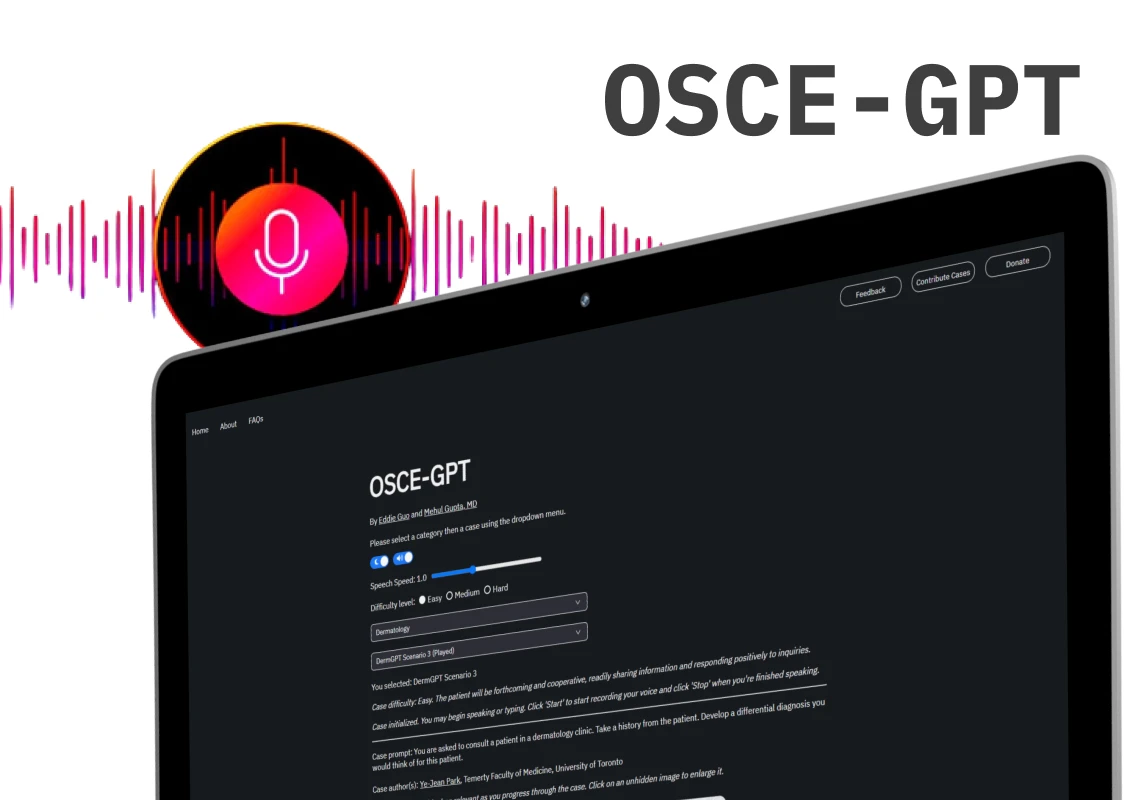
A generative AI workforce-training startup can create adaptive learning without manually producing every scenario. The platform can generate role-specific lessons, simulate workplace conversations, translate material, provide rubric-based feedback, and adjust difficulty.
A practical workflow is the following:
- An administrator uploads approved policies and competency standards.
- The platform creates grounded learning scenarios.
- The learner completes a text, voice, or video role-play.
- The model evaluates the response against a defined rubric.
- A trainer reviews low-confidence or high-risk results.
- The system recommends the next lesson based on skill gaps.
The defensible asset is not the generated lesson alone. It is the combination of trusted content, assessment logic, learner data, integrations, and measurable outcomes.
Synthesia demonstrates how generated presenters and voiceovers can reduce traditional video-production effort. However, a workforce-training startup still needs instructional design, subject-matter review, assessment criteria, and quality controls.
Which Generative AI Startups Are Worth Studying?
These are examples of focused positioning, not a ranking of the “best” generative AI startups:
- Harvey: Legal and professional-services workflows such as contract analysis, due diligence, compliance, and litigation support.
- Glean: Enterprise search, assistants, and agents connected to workplace data.
- Writer: Governed enterprise AI for organizational knowledge, content, and agentic workflows.
- Synthesia: Business video creation using AI avatars and generated voiceovers.
Each targets a recognizable user, frequent workflow, and operational outcome. Study the problem and adoption model rather than copying the interface.
What Is the Best Generative AI Infrastructure for a Tech Startup?
There is no universal best infrastructure. The right architecture depends on data sensitivity, accuracy, latency, traffic, model flexibility, and engineering capacity.
| Startup stage | Recommended approach |
| Prototype | Hosted model API, simple backend, prompt logging |
| MVP | Model abstraction, retrieval, analytics, basic evaluations |
| Early scale | Model routing, caching, queues, observability, and access controls |
| Regulated scale | Private networking, audit logs, red-team testing, governance |
Most startups should begin with commercial or open-model APIs. Add retrieval-augmented generation when the product needs trusted private knowledge.
Fine-tuning can improve formatting, tone, or repeatable behavior, but it does not replace retrieval for frequently changing information.
A practical generative AI startup stack has five layers:
- Experience: Web, mobile, chat, voice, or embedded interface.
- Application: Business logic, workflows, permissions, and integrations.
- AI orchestration: Prompts, tool use, model routing, and guardrails.
- Data: Vector search, databases, files, and permission-aware retrieval.
- Operations: Evaluations, tracing, cost monitoring, security, and incident response.
AWS’s GenAIOps guidance recommends treating infrastructure, model lineage, and evaluation as production disciplines from the beginning.
Original diagram recommendation: Create a five-layer “Generative AI Startup Stack” graphic using the architecture above.
How Should Founders Build a GenAI MVP?
1. Start With an Expensive User Problem
Interview potential users and measure the current cost, delay, error rate, or lost revenue before proposing an AI feature.
A clear baseline helps founders determine whether the product is genuinely improving the workflow or simply making it look more innovative.
2. Define the Smallest Valuable Task
Avoid building an assistant that “does everything.” Choose one narrow job, such as:
- Extracting obligations from a contract
- Generating a training scenario from approved material
- Summarizing a sales call
- Preparing a support-ticket response
- Converting customer feedback into themes
A focused task is easier to evaluate, price, and improve.
3. Build a Thin Workflow
Use existing models and APIs to validate demand before investing in custom infrastructure.
The AI MVP development guide explains why early products should prioritize user value over custom-model complexity.
4. Create Evaluations Before Launch
Build a test set using realistic user requests. Evaluate:
- Factual accuracy
- Groundedness
- Safety
- Response time
- Task completion
- Cost per request
- Failure and fallback behavior
Sensitive, regulated, or low-confidence outputs should be routed to human review.
5. Test Pricing and Unit Economics
Calculate model usage, retrieval, storage, infrastructure, support, and human-review costs per customer or completed task.
A startup may attract users but still struggle if each interaction produces poor gross margins. Cost controls should therefore be designed alongside the product, not added after growth.
6. Expand Only After Evidence
Add integrations, agents, or additional models after the first workflow demonstrates repeat usage, acceptable output quality, and customer willingness to pay.
Use the MVP development cost guide to plan scope, development stages, and budget.
First-hand implementation insight: A common discovery mistake is treating the chatbot as the complete product. Stronger teams map the full workflow around the model, including source data, permissions, fallback behavior, human review, and the action the user takes after receiving an answer.
Downloadable asset recommendation: Offer a “Generative AI Startup Readiness Scorecard” covering problem severity, data access, evaluation criteria, compliance risk, expected usage, integration effort, and gross-margin assumptions.
What Mistakes Should Generative AI Startups Avoid?
Building a Thin AI Wrapper
Model access is widely available. Defensibility requires workflow expertise, difficult integrations, distribution, proprietary data, or a meaningfully better outcome.
Ignoring Evaluation
A polished demo may still fail on unusual inputs, conflicting documents, incomplete context, or adversarial prompts. Test representative tasks before releasing the product to customers.
Giving AI Agents Excessive Permissions
Begin with read-only access or staged approvals. Restrict available tools, validate actions, and log sensitive operations.
Trusting Fluent Output
Generated answers may sound confident while being inaccurate.
NIST’s Generative AI Profile recommends structured risk identification, measurement, and management throughout the AI lifecycle.
Scaling Before Validating Demand
Do not optimize infrastructure for millions of requests before proving customer retention. Early-stage architecture should be reliable, measurable, and adaptable.
Conclusion
Generative AI startups succeed when they turn model capabilities into repeatable business outcomes. The opportunity may be a vertical copilot, workforce-training platform, knowledge assistant, developer tool, content system, or controlled AI agent.
Start with an API-first MVP, evaluate real tasks, protect sensitive data, and monitor unit economics. After users repeatedly depend on the workflow, invest in deeper integrations and proprietary capabilities.
Founders can explore generative AI development services for architecture, prototyping, model integration, and production implementation.
Frequently Asked Questions
Are Generative AI Startups Still a Good Opportunity?
Yes, but generic assistants face heavy competition. Strong opportunities remain in industry-specific workflows, proprietary data, difficult integrations, regulated processes, and products with measurable ROI.
What Is the Best Generative AI Infrastructure for a Startup?
For most startups, begin with a hosted model API, cloud backend, retrieval layer, prompt logging, and a small evaluation suite. Add routing, caching, private networking, and advanced monitoring as usage and risk increase.
Should a Startup Train Its Own Large Language Model?
Usually not during the MVP stage. Training a foundation model requires substantial data, talent, computing resources, and operational support. APIs, open models, retrieval, and selective fine-tuning are more practical for most startups.
What Is the Best AI Name Generator for SaaS Startups?
Use a tool that accepts clear positioning criteria and supports domain and trademark validation. A general-purpose model can generate names based on audience, tone, pronunciation, and excluded words, but every option requires legal and domain checks.
How Can GenAI Support a Workforce Training Startup?
It can generate scenarios, simulate conversations, translate lessons, provide rubric-based feedback, and personalize learning paths. Human review remains important for regulated or safety-critical training.










 30 mins free Consulting
 11 min read
 Canada
 Hong Kong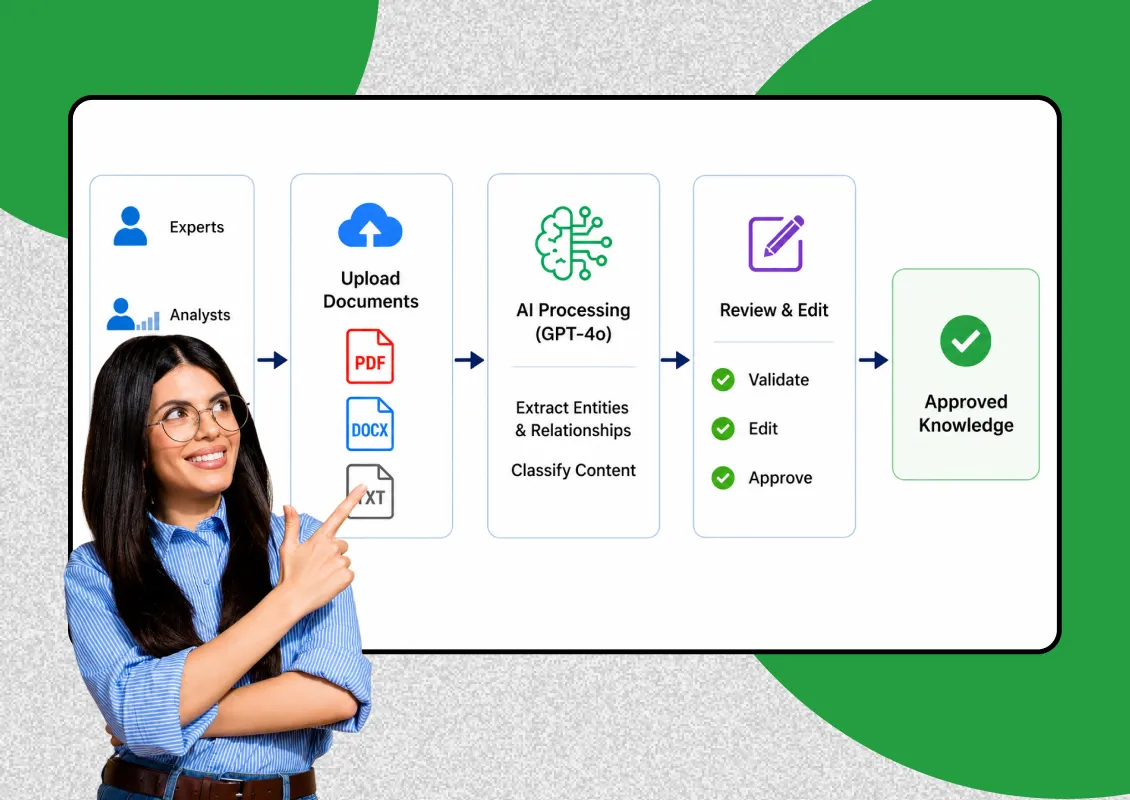
 United States





 Love we get from the world