

 Lets Talk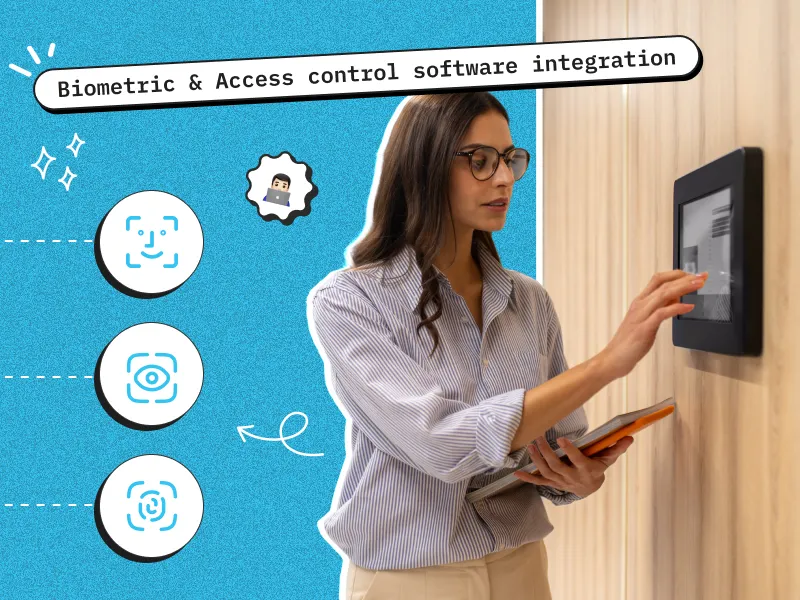
Quick Summary:
Integrating biometric access control solutions with modern security systems is a game-changer. This guide explores how biometric access control systems enhance protection, streamline access management, and reduce vulnerabilities. From facial recognition to fingerprint scanning, discover how businesses can implement cutting-edge access control and biometrics to secure their premises and sensitive data. Whether upgrading an existing system or starting from scratch, this guide provides actionable insights into access control integration for maximum security and efficiency.
Why Integration Matters in Access Control and Biometrics
As security technology rapidly evolves, seamless access control integration with biometric systems has become a critical innovation. Biometric access control systems leverage unique physiological and behavioral traits, such as fingerprints, iris scans, or facial recognition, redefining identity authentication.
Traditional access control systems manage permissions and monitor entries using software-based solutions integrated with physical infrastructure. When combined with biometric access control solutions, they create a powerful security framework that enhances both protection and operational efficiency.
This blog explores the intricacies of this integration, the benefits it delivers, and why companies, especially biometric technology providers, should focus on partnering with established access control software firms. Let’s delve into the fundamentals to understand how access control and biometrics shape the future of secure environments.
Understanding Biometric Systems: How They Work and Why They Matter
Biometric access control solutions revolutionize security by utilizing unique human characteristics for identification and authentication. Unlike passwords or access cards, biometrics rely on inherently unique identifiers like fingerprints, facial features, or voice patterns. This section examines how biometric access control systems function and their essential components.
How Biometric Systems Work
Biometric access control systems operate through a standardized process with four key components:
- Capture: The system collects biometric data using specialized sensors. This could be a fingerprint scan, iris scan, or facial recognition image.
- Feature Extraction: The captured data is processed to extract unique features. For example, fingerprint recognition analyzes minutiae points, such as ridge endings and bifurcations, and stores them as a digital template.
- Comparison: The system compares extracted biometric features against stored templates in the database to determine a match. This process may be one-to-one (verification) or one-to-many (identification).
- Decision-Making: Based on the comparison results, the system grants or denies access. Advanced algorithms ensure high accuracy, minimizing false positives and negatives.
Read More: How Biometric Access Control System Works
Types of Biometric Modalities
Biometric access control solutions use a range of modalities, categorized as physiological or behavioral:
Physiological Biometrics:
- Fingerprints: The most widely used method, offering high accuracy and convenience.
- Facial Recognition: Authenticates users by analyzing facial structure.
- Iris and Retina Scans: Highly secure due to the uniqueness and stability of eye patterns.
Behavioral Biometrics:
- Voice Recognition: Identifies individuals based on unique vocal traits.
- Gait Analysis: Recognizes individuals by analyzing their walking patterns.
Understanding Access Control: The Foundation of Modern Security
Access control systems are essential for safeguarding physical and digital environments by managing entry permissions. These systems enhance security, user convenience, and regulatory compliance. This section explores the core components and mechanisms of access control integration.
What is an Access Control System?
An access control system combines hardware and software to regulate access to specific areas, assets, or information. Unlike traditional lock-and-key mechanisms, modern access control solutions use digital methods for centralized management and enhanced security.
Commonly deployed in offices, healthcare facilities, educational institutions, and government buildings, these systems ensure authorized access while tracking entry and exit logs.
How Access Control Systems Work
Access control systems function through interconnected components that regulate and monitor entry:
- Identification: The system identifies the user through credentials such as an access card, PIN, or biometric input (e.g., fingerprint or facial recognition).
- Authentication: The system verifies the credentials against a database of authorized users. Multi-factor authentication (e.g., password + biometric scan) enhances security.
- Authorization: Based on authentication results, the system grants or denies access according to predefined rules. Employees, for instance, may access general areas but not sensitive data centers.
- Access and Logging: If access is granted, the system sends a signal to unlock the barrier and records the event for audit purposes.
Key Components of an Access Control System
- Credentials: Identification tools, such as cards, PIN codes, mobile apps, or biometric data.
- Readers: Devices that capture and interpret credentials, such as fingerprint scanners and facial recognition cameras.
- Control Panel: The “brain” of the system, facilitating communication between readers and locking mechanisms.
- Locking Mechanisms: Electronic locks or electromagnetic devices securing access points.
- Software: Centralized software for managing permissions, monitoring activity, and generating security reports.
Types of Access Control Systems
Access control systems vary in implementation and complexity:
- Discretionary Access Control (DAC): Resource owners define access permissions. While flexible, it offers less security.
- Role-Based Access Control (RBAC): Permissions are assigned based on user roles, ensuring access aligns with job functions.
- Attribute-Based Access Control (ABAC): Access is determined by user attributes (e.g., job title, location, access time), allowing granular control.
- Cloud-Based Access Control: Managed remotely, these systems provide real-time updates and seamless access control integration with mobile credentials and IoT devices.
The GAP: Why Biometric Access Control Integrations Are Essential
While biometric access control solutions and traditional access control systems each offer robust security features, their standalone implementation often leads to inefficiencies, security gaps, and a suboptimal user experience. The seamless integration of access control and biometrics bridges these gaps, enabling businesses to maximize security, operational efficiency, and compliance.
This section explores the shortcomings of non-integrated security systems and highlights why a biometric access control system is crucial for modern enterprises.
The Gaps in Traditional Systems
1. Siloed Systems
Traditional access control systems and biometric authentication often operate separately, creating data silos that hinder real-time security monitoring and efficiency.
2. Limited Security Coverage
Standalone access control systems like keycards are vulnerable to theft and cloning, while isolated biometric solutions may lack comprehensive reporting or administrative capabilities.
3. Operational Complexity
Managing separate platforms for identity verification and access control increases administrative overhead and complicates the user experience.
4. Scalability Issues
Non-integrated systems struggle to scale efficiently, making it time-consuming and costly to add new access points or onboard additional users.
5. Compliance Risks
Industries with strict regulatory requirements need seamless audit trails. A biometric access control system that integrates with access management ensures better compliance and reporting.
Benefits of Integrating Biometric Systems with Access Control Solutions
1. Enhanced Security: Multi-Factor Authentication and Real-Time Monitoring
Multi-Factor Authentication (MFA):
An integrated biometric access control system can combine biometric authentication with keycards or PINs for dual or triple-layer security.
Example: Healthcare facilities requiring fingerprint scans and PIN verification for restricted areas like pharmacies.
Real-Time Monitoring and Alerts:
Biometric access control solutions provide instant alerts on unauthorized access attempts and deliver real-time data for security teams to act upon.
Tamper-Resistant Authentication:
Technologies like liveness detection prevent unauthorized access by ensuring that only a live user—not a replica—can gain entry.
2. Operational Efficiency: Centralized Management and Automation
Centralized Credential Management:
Administrators can manage biometric templates, access levels, and permissions from a single platform.
Example: An office building with hundreds of employees can instantly update access permissions via a unified dashboard.
Time and Attendance Tracking:
Biometric data can sync with HR systems, automating attendance logging and payroll processing.
Example: Employees clock in via facial recognition terminals that update attendance records in real time.
Seamless Integration with Existing Systems:
Access control integration with biometrics ensures smooth compatibility with visitor management systems and other security applications.
3. Scalability and Flexibility: Adapting to Evolving Security Needs
Easily Expandable Infrastructure:
Adding new access points or enrolling users becomes effortless with an integrated biometric access control system.
Example: A retail chain deploying biometric authentication across multiple locations with minimal disruption.
Customizable Access Levels:
Security protocols can be tailored for different zones within an organization.
Example: Airports using varying security measures for public access, staff-only zones, and high-security areas like air traffic control rooms.
Diverse Industry Applications:
Biometric access control solutions cater to corporate offices, healthcare facilities, critical infrastructure, and educational institutions.
Example: Universities integrating biometrics for dormitory entry, exam hall authentication, and cafeteria payments.
Challenges in Integration
While integrating biometric systems with access control solutions offers immense benefits, the process is not without challenges. Understanding these hurdles is key to developing effective strategies and ensuring smooth implementation.
1. Technical Challenges: Compatibility and Legacy Systems
Interoperability Issues:
Biometric and access control systems may use different protocols, requiring middleware solutions for compatibility.
Example: Older access control systems may need upgrades to support biometric authentication.
Legacy System Limitations:
Outdated infrastructure can pose integration challenges, necessitating costly replacements or modifications.
Example: A company using keycard-based access might need significant hardware upgrades to implement biometrics.
Complex System Architectures:
Large facilities often require multi-location integration, increasing deployment complexity and troubleshooting needs.
2. Cost Considerations and ROI Concerns
The upfront costs of implementing integrated biometric and access control systems can be significant, posing a barrier for some organizations.
High Initial Investment:
Costs involve biometric hardware, software configuration, system upgrades, and staff training.
Example: Deploying iris recognition systems across a multi-location enterprise.
Measuring ROI:
While security and operational efficiencies improve over time, businesses often struggle to quantify immediate returns.
Example: A retail business assessing cost savings from reduced theft and fraud post-integration.
3. Privacy and Compliance Considerations
Data Security Risks:
Biometric data is sensitive and irreversible, requiring strict encryption and storage protocols.
Example: A compromised fingerprint database poses irreversible security risks, unlike password resets.
Regulatory Compliance:
Businesses must comply with data protection laws like GDPR or CCPA when implementing biometric access control solutions.
Example: A European company ensuring GDPR compliance through explicit user consent and data encryption.
User Concerns and Adoption Resistance:
Employees may hesitate to adopt biometric systems due to privacy concerns.
Example: Companies deploying facial recognition for office access may face employee pushback over surveillance fears.
Overcoming Integration Challenges
1. Invest in Open Standards:
Choose biometric systems with open APIs and standardized protocols for seamless access control integration.
2. Strengthen Data Security:
Implement encryption, secure storage, and periodic audits to protect biometric data.
3. Demonstrate ROI with Case Studies:
Showcase real-world examples of improved security, operational efficiencies, and cost reductions.
4. Educate and Engage Stakeholders:
Transparent communication about data usage, security measures, and compliance builds trust and encourages adoption.
Why Biometric Companies Should Prioritize Access Control Integration
For biometric companies, integrating their solutions with biometric access control solutions isn’t just a strategic advantage—it’s a necessity in today’s competitive security landscape. Businesses demand seamless, multi-functional security solutions, and understanding the key reasons to integrate biometrics with biometric access control systems provides a pathway to growth, differentiation, and long-term success.
1. Market Differentiation: Stand Out by Offering Integrated Biometric Access Control Solutions
Biometric companies that prioritize access control integration can distinguish themselves in a crowded market.
Meeting Client Demands
Organizations increasingly seek unified systems that combine biometric authentication with broader security frameworks. Offering pre-integrated biometric access control solutions with leading platforms makes your products more appealing.
Enhancing the Value Proposition
Integration demonstrates a commitment to delivering value beyond standalone products. By enabling seamless functionality across systems, biometric companies can position themselves as innovative solution providers.
Example: Biometric firms integrating their facial recognition technology with video surveillance and access control and biometrics software create a holistic security ecosystem.
Winning Enterprise Contracts
Large-scale enterprises prefer vendors that offer end-to-end access control integration to minimize operational complexity and vendor lock-in.
2. Increased Adoption: Expand Market Reach Through Strategic Partnerships
Integration enables biometric companies to collaborate with biometric access control system leaders, opening doors to new markets and industries.
Collaborative Ecosystems
Partnerships with established biometric access control providers allow biometric firms to leverage existing market presence and client bases.
Example: Collaborating with a leading biometric access control company enables biometric providers to integrate their systems into high-demand verticals like healthcare, banking, and government.
Broader Use Cases
Integrated biometric access control solutions can address diverse requirements, from critical infrastructure to retail, expanding the application of biometric technologies.
Accelerated Sales Cycles
Pre-configured integrations reduce deployment complexity, making it easier for clients to adopt biometric solutions, accelerating sales and implementation timelines.
3. Future-Proofing: Stay Ahead of Security Trends and Compliance Requirements
The security landscape is constantly evolving, and biometric access control integration ensures that biometric companies remain relevant and adaptable.
Alignment with Smart Building Trends
Integrated biometric access control solutions are essential for enabling smart building functionality, such as automated lighting, HVAC controls, and occupancy tracking.
Example: Biometric solutions integrated into biometric access control systems can automate building responses, like adjusting room temperature based on user presence.
Compliance with Evolving Regulations
Access control and biometrics integration helps ensure that biometric systems align with data protection standards and future compliance requirements.
Example: Many biometric access control systems are built with privacy safeguards, ensuring biometric data flows adhere to strict regulations like GDPR.
Adopting Open Standards
Integration with platforms using open APIs and common protocols ensures scalability and adaptability to future technologies.
Why Access Control Integration is a Strategic Imperative
- Increased Market Share: Offering solutions compatible with major biometric access control systems allows biometric companies to capture a larger portion of the security market.
- Improved Client Loyalty: Integrated biometric access control solutions reduce operational friction for clients, fostering long-term partnerships.
- Competitive Advantage: As demand for holistic security solutions grows, biometric companies prioritizing access control integration will be positioned as industry leaders.
Integration is no longer optional for biometric companies—it’s a core strategy for growth, innovation, and relevance in a rapidly advancing security landscape.
Real-World Success Story: Suprema and Gallagher Integration by Creole Studios
An excellent example of the power of biometric access control integration is the collaboration between Suprema Inc., a leader in biometric access control technology, and Gallagher, a globally recognized provider of access control solutions. Together with Creole Studios, they achieved seamless integration that enhanced efficiency, security, and user experience.
The Challenge
Suprema and Gallagher faced operational inefficiencies due to the lack of integration between their biometric access control systems:
- Duplicate Processes: User enrollment and management had to be conducted separately, leading to redundancy and potential data discrepancies.
- Fragmented User Experience: Administrators had to toggle between two platforms to manage biometric access control permissions, complicating workflows.
- Delayed Data Updates: Real-time synchronization of user data across the systems was unavailable, causing inconsistencies in access control management.
The Integration Solution
Creole Studios developed a tailored biometric access control integration that unified the capabilities of Suprema’s biometric devices with Gallagher’s access control platform. This solution bridged the gap between the two systems, offering:
- Real-Time Data Synchronization: User data was seamlessly synchronized across both systems, ensuring accurate and consistent access permissions.
- Centralized User Management: Administrators gained a single interface to manage all access control and biometrics credentials, simplifying workflows and reducing administrative overhead.
- Custom Configuration Options: Suprema’s devices could now be configured directly within the integrated system, providing flexibility and enhanced operational control.
The Results
The integration delivered measurable benefits for Suprema, Gallagher, and their clients:
- Operational Efficiency: The elimination of duplicate processes and centralized management reduced administrative burdens significantly.
- Enhanced Security: Real-time synchronization ensured that user data remained up-to-date, reducing the risk of unauthorized access.
- Improved Market Positioning: This biometric access control integration became a standout feature, allowing Suprema and Gallagher to demonstrate their commitment to innovation and attract new customers.
Krista Kim from Suprema highlighted the impact of the project: “The integration developed by Creole Studios has been positively impacting our relationship with Gallagher, and we are now able to target and showcase this solution to attract new customers.”
This success story demonstrates how integrating biometric access control solutions can address operational challenges, streamline processes, and enhance security.
Read the full case study here to learn more about this integration
Partnering with the Right Access Control Integration Specialist
Choosing the right technology partner for biometric access control integration can make all the difference in achieving seamless functionality, enhanced security, and scalable solutions.
Key Attributes to Look for in a Technology Partner
- Expertise in Biometric Access Control Solutions: A partner with proven experience in both biometric technologies and access control systems ensures effective integration.
- Track Record of Successful Integrations: A reliable partner will have a portfolio showcasing past projects with biometric access control systems.
- Focus on Innovation: Partners using open standards, APIs, and modern tools deliver future-ready solutions.
- Customization and Scalability: The best partners provide tailored solutions that grow alongside your business.
- Commitment to Data Security: Ensuring the secure handling of sensitive biometric data is crucial for regulatory compliance.
How Creole Studios Stands Out
At Creole Studios, we specialize in creating tailored access control integration solutions that align with your specific business goals. Our expertise spans biometric technologies, biometric access control systems, and custom software development, making us uniquely equipped to handle complex integration challenges.
Why Partner with Us?
- Proven Expertise: We’ve successfully integrated leading biometric devices with biometric access control solutions for global clients.
- Client-Centric Approach: Our solutions are customized to solve your specific challenges.
- Secure and Scalable Solutions: Our integrations safeguard sensitive data while providing flexibility for business growth.
Conclusion
The integration of biometric access control solutions is no longer a luxury—it’s a necessity. By merging biometric authentication with access control systems, businesses can achieve unparalleled security, operational efficiency, and adaptability.
Let’s Build the Future Together
At Creole Studios your digital transformation partners specialize in delivering tailored solutions that seamlessly integrate biometric systems with access control platforms. Whether you’re looking to enhance security, improve operational efficiency, or future-proof your systems, we’re here to help.
Learn more about our success stories and how we can help you achieve your goals. Contact us today!
FAQs
What Are Biometric Access Control Systems?
A biometric access control system is a security solution that uses unique biological traits—such as fingerprints, facial recognition, iris scans, or voice patterns—to verify a person’s identity before granting access to a restricted area. Unlike traditional access control methods (keycards, PINs, or passwords), biometric access control solutions provide enhanced security by ensuring only authorized individuals can enter. To further strengthen security protocols, organizations often combine these systems with background checks to ensure that only trustworthy individuals gain access. These systems are widely used in offices, data centers, healthcare facilities, and high-security environments where identity verification is crucial.
What Is an Integrated Access Control System?
An integrated access control system combines multiple security technologies—including access control and biometrics, video surveillance, and alarm systems—into a unified platform for seamless security management. By integrating biometric authentication with existing access control infrastructure, businesses can improve security, streamline operations, and enhance user convenience. Access control integration ensures real-time monitoring, centralized user management, and compliance with regulatory requirements, making it ideal for enterprises, government buildings, and other high-security environments.
What is biometric and access control integration?
Biometric and access control integration combines the strengths of biometric identification systems (e.g., fingerprint, facial recognition) with access control software. This integration enables seamless authentication and entry management by merging physical or behavioral biometric traits with advanced permission-setting and tracking capabilities in access control systems.
- Example: An employee scans their fingerprint to gain access to a secure area. The system simultaneously verifies their identity and logs their entry in the centralized database.
How does it improve security?
Biometric and access control integration significantly enhances security in several ways:
- Multi-Factor Authentication: By requiring multiple credentials (e.g., biometrics and access cards), it becomes nearly impossible for unauthorized individuals to bypass security.
- Eliminates Credential Sharing: Biometric traits cannot be shared, reducing risks associated with stolen or copied keycards.
- Real-Time Monitoring: Integrated systems provide instant updates and alerts, ensuring rapid response to suspicious activities.
- Detailed Audit Trails: Logs every access attempt, allowing for better monitoring and compliance audits.
Are biometric systems prone to data breaches?
While biometric systems are generally more secure than traditional access methods, they are not immune to breaches:
- Risks:
- If improperly encrypted, biometric templates stored in databases can be vulnerable to theft.
- Advanced spoofing techniques could theoretically bypass biometric systems, though this is rare and highly technical.
- Mitigations:
- Encryption and secure storage of biometric data are standard practices to prevent breaches.
- Using multi-factor authentication and advanced liveness detection (to verify the authenticity of biometric inputs) further minimizes risks.
How much does integration typically cost?
The cost of biometric and access control integration varies widely based on the complexity of the project, the scale of implementation, and the technologies involved. Key factors influencing cost include:
- POC: Could easily average at 25,000 to 30,000 USD
- Full Integration: 80,000 USD to 120,000 USD
- Maintenance:10,000 USD to 15,000 USD / YEAR
To get a more accurate estimate tailored to your needs, consider using our Cost Calculator Tool. This tool helps you evaluate costs based on your specific project requirements, ensuring better planning and budgeting for your integration.
Investing in an integrated system often results in long-term savings through improved efficiency, reduced manual labor, and enhanced security.
What industries benefit the most from these systems?
Biometric and access control integrations are valuable across numerous industries, particularly those requiring high-security measures, operational efficiency, and regulatory compliance:
- Healthcare: Protect sensitive areas like operating rooms and medication storage while ensuring compliance with HIPAA and other regulations.
- Financial Services: Secure data centers, vaults, and employee-only areas while maintaining detailed audit logs for compliance.
- Government and Defense: Safeguard classified information and restricted facilities with robust, scalable systems.
- Education: Manage access to campuses, dormitories, and labs while improving student safety.
- Manufacturing and Logistics: Protect valuable inventory and monitor workforce movements in large, complex facilities.


 10 min read


