
AI SOFTWARE FACTORY AUTOMATION
Creole Studios designed an AI-enabled software engineering system that connects requirements, architecture, coding, testing, infrastructure, and deployment. The solution combines AI-assisted development, reusable engineering standards, automated validation, and human approval checkpoints to improve software delivery without removing developer control.
 Remote
8k - 12k USD
2 - 3 Months
Web
About the Project
Building a Structured AI-Powered Software Development System
The project focused on creating an AI Software Factory that brings fragmented engineering activities into one controlled development environment.
The solution standardizes requirements, development, testing, infrastructure, and deployment while introducing AI workflows where automation can improve engineering efficiency.
Organizations can use the factory in two ways: Creole Studios can operate it to deliver software projects, or we can implement a customer-owned factory for an existing engineering team.

Project Challenges
The key challenge was introducing AI into software development without creating uncontrolled automation, inconsistent engineering practices, or production risks.


Fragmented Engineering Workflows : Requirements, coding, testing, infrastructure, and deployment were treated as separate activities, making consistent software delivery difficult.
Inconsistent Development Standards : Different teams and projects can follow different coding, testing, documentation, and deployment practices, reducing consistency across delivery.
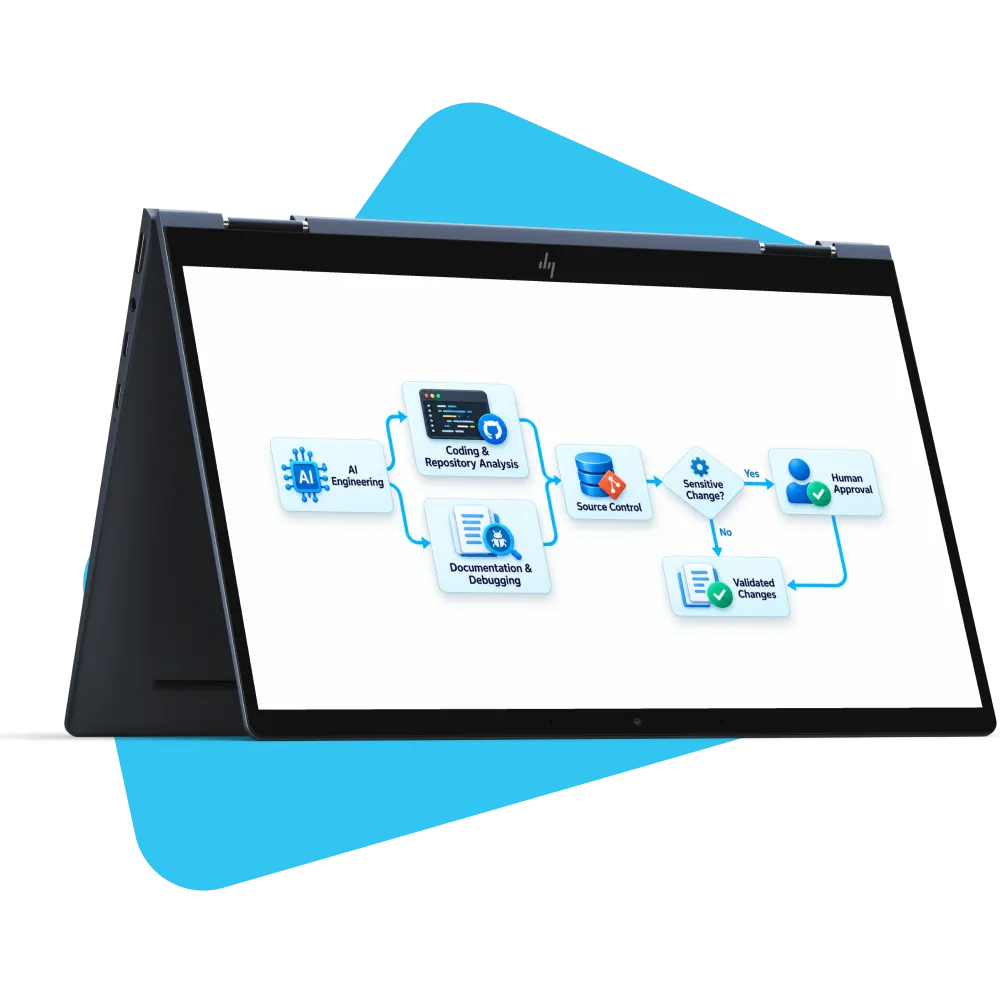
Limited AI Development Governance : AI-generated development work requires clear validation, traceability, permissions, and human review before progressing toward production.
Maintaining Human Control : The system needed to automate suitable engineering tasks while ensuring sensitive changes and production releases remained under human approval.


How Did We Help?
We Built a Controlled AI-Enabled Engineering Environment
Requirements Standardization
AI-Assisted Development
Reusable Engineering Standards
Automated Validation
Human Approval Gates
Development Traceability
Flexible Factory Model

The outcome
The AI Software Factory created a repeatable foundation for using AI across software engineering while maintaining human governance and production control.
Key Outcomes
- More standardized software development practices
- Improved consistency across engineering workflows
- AI-assisted development with controlled automation
- Automated validation before human review
- Greater traceability across development activities
- Human-controlled production releases
- Reusable delivery model across software projects
The solution enables organizations to increase the role of AI in software delivery without treating autonomous development as a replacement for experienced engineers.

Jaden Anderson
“The AI Software Factory is designed to automate repeatable engineering work while keeping developers responsible for architecture, quality, security, and production decisions.”