

 Lets Talk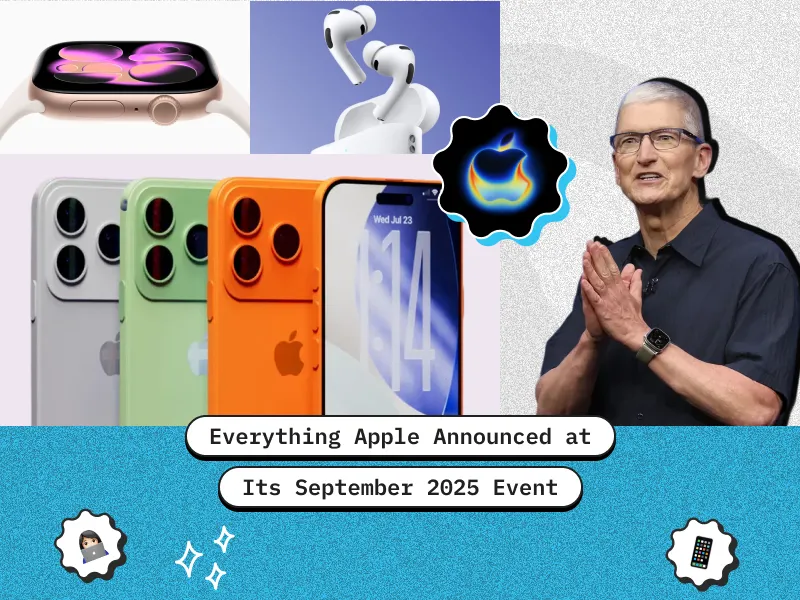
TL;DR:
- iPhone 17 lineup: Four models launched, including the ultra-slim iPhone Air; upgrades include ProMotion displays, A19/A19 Pro chips, and bigger batteries.
- Apple Watch refresh: Series 11, SE 3, and Ultra 3 add blood pressure monitoring, sleep scoring, temperature detection, and satellite messaging.
- AirPods Pro 3: New design, heart-rate sensors, fitness tracking, and live real-time translation powered by Apple Intelligence.
- iOS 26: Introduces a “Liquid Glass” design aesthetic, reshaping UI/UX expectations for iOS apps.
- For software development firms: These updates open opportunities in AR/VR, healthtech, fitness, translation apps, and adaptive UI design for Apple’s evolving ecosystem.
Introduction:
Apple’s annual September keynote has long been the centerpiece of the tech calendar, setting the tone for hardware and software innovation in the months to come. The September 2025 “Awe Dropping” event at Apple Park in Cupertino was no exception. This year’s showcase wasn’t just about incremental upgrades — it highlighted Apple’s strategy to differentiate itself through sleeker designs, deeper health integrations, stronger device security, and a tighter ecosystem experience.
The spotlight fell on the iPhone Air, Apple’s thinnest smartphone ever, alongside the refreshed iPhone 17 lineup, new Apple Watch models with advanced health monitoring, and AirPods Pro 3 featuring real-time translation powered by Apple Intelligence. Collectively, these announcements signaled Apple’s push to stay ahead in hardware while cautiously weaving AI into the user experience.
For everyday consumers, these products promise better performance, durability, and convenience. But for a software development firm, the implications run much deeper. High-refresh displays and new chips demand more optimized mobile apps, wearable health APIs create room for innovative fitness and medical solutions, and AI-driven translation on AirPods opens entirely new categories in travel, education, and collaboration software. In short, Apple’s September event wasn’t just a product reveal it was a roadmap for where development opportunities are headed in the Apple ecosystem.
iPhone 17 Lineup: Apple’s Boldest Upgrade Yet — And the Opportunities for Software Development Firms
At the heart of Apple’s September 2025 event was the launch of the new iPhone 17 family, a lineup that balances sleek design with meaningful performance gains. This year, Apple unveiled four devices: the standard iPhone 17, the more powerful iPhone 17 Pro, the feature-packed iPhone 17 Pro Max, and the headline-grabbing iPhone Air — Apple’s thinnest phone ever. Together, they represent Apple’s most versatile iPhone range to date.
iPhone 17: Everyday Device with Pro-Level Features
- 6.3-inch ProMotion display with 120Hz refresh rate, Always-On functionality, and up to 3,000 nits brightness for vibrant visuals in any environment.
- Powered by the new A19 chip with support for Wi-Fi 7, Bluetooth 6, and Thread networking, making it future-ready for connected ecosystems.
- Dual 48MP Fusion rear cameras plus an upgraded 18MP Center Stage front camera for sharper selfies and video calls.
- 30 hours of video playback and 40W fast charging (50% in 20 minutes).
- Starts at $799, now with 256GB base storage (a big leap from the 128GB entry-level of past models).
iPhone 17 Pro and Pro Max: Performance Powerhouses
- Equipped with the A19 Pro chip and an advanced vapor cooling system to handle demanding tasks like high-end gaming and AR.
- Redesigned backs with larger batteries for longer runtime.
- 48MP telephoto camera for improved zoom.
- Pro Max pushes storage up to a staggering 2TB — the most ever in an iPhone.
- Pricing: $1,099 (Pro) and $1,199 (Pro Max).
iPhone Air: The Slimmest iPhone Ever
- 5.6mm profile, Apple’s thinnest smartphone yet, crafted with a titanium frame.
- 6.6-inch display, eSIM-only design, and a streamlined single 48MP rear camera.
- Despite its thinness, it was pitched as Apple’s “most durable design yet.”
- Priced at $999, aimed at users who want something light, stylish, and cutting-edge.
Ready to Build the Next Big iOS App?
Apple’s 2025 event opens new doors in healthtech, AI, and AR. Don’t fall behind — start building apps that match the future of iOS.

What This Means for Software Development Firms
The iPhone 17 lineup isn’t just about shiny new hardware — it sets the stage for how apps will be built and optimized moving forward:
- Visual Performance Expectations: With 120Hz ProMotion and industry-leading brightness, users will expect buttery-smooth animations and crystal-clear visuals. Apps that feel laggy or dull risk standing out for the wrong reasons. Software firms should prioritize high-refresh UI design and optimized graphics rendering.
- Next-Gen Processing Power: The A19 and A19 Pro chips can handle heavier workloads, including AR/VR, AI-driven personalization, and console-quality mobile gaming. Firms building apps in these categories should take advantage of the expanded headroom for performance.
- eSIM-Only Experience: With the iPhone Air moving fully to eSIM, global connectivity workflows will need to be rethought. This opens opportunities for software firms in travel, telecom, and fintech to create smarter onboarding, roaming, and digital identity solutions.
- Larger Base Storage: With 256GB as the new standard, developers can comfortably design apps that use richer media, higher-resolution assets, and local AI models without worrying as much about storage constraints.
For software development firms, the message is clear: Apple’s iPhone 17 lineup raises the bar on performance, connectivity, and design expectations. Firms that adapt their apps early to take advantage of these new capabilities will be the ones delivering standout experiences to iOS users in 2025 and beyond.
Security: Reinforcing Apple’s Core Strength
Alongside the performance and design upgrades, the iPhone 17 series also strengthens Apple’s long-standing commitment to security and privacy — a major factor for both users and developers. Apple continues to refine the Secure Enclave, passkey authentication, and Lockdown Mode to make iPhones more resistant to cyber threats and data leaks.
Developers and businesses must now align their apps with Apple’s enhanced privacy framework and system-level encryption. With sensitive data increasingly processed on-device through the A19 chip, developers can design experiences that minimize cloud dependencies and ensure stronger user protection.
From a user perspective, it’s more important than ever to stay informed about device protection best practices. Simple actions such as keeping iOS updated, using Face ID and strong passcodes, and avoiding unverified links or apps can go a long way in defending against malicious activity. To learn how to enhance your digital safety, explore proven ways to protect iPhone from hackers.
For software development firms, security shouldn’t just be a compliance checkbox — it’s now a key part of the user experience. Prioritizing data privacy, secure authentication, and encrypted communication will not only align with Apple’s evolving ecosystem but also build lasting trust among iOS users.
Apple Watch Series 11, SE 3, and Ultra 3 — And What They Mean for Software Development Firms
Alongside the iPhone 17 lineup, Apple delivered a full refresh of its smartwatch family. The new Apple Watch Series 11, Apple Watch SE 3, and Apple Watch Ultra 3 bring stronger health capabilities, better connectivity, and improved durability — all designed to extend Apple’s dominance in wearables.
Apple Watch Series 11: Thinner, Smarter, More Health-Focused
- Apple’s thinnest watch yet, with a sleeker profile for all-day comfort.
- Introduces blood pressure monitoring, a feature expected to gain FDA clearance soon, potentially alerting millions of users to hypertension risks.
- Adds a new sleep score tool to give users deeper insights into rest quality.
- 5G connectivity for faster app updates, streaming, and messaging.
- Battery life extended to 24 hours.
Apple Watch Ultra 3: Rugged Power for Professionals and Adventurers
- Built with a larger, brighter display and rugged casing designed for outdoor and professional use.
- Battery life now stretches to 42 hours on a single charge.
- Introduces satellite messaging — letting users send texts or location data even without cell coverage.
- Includes all health tracking features from the Series 11, making it both a survival tool and health monitor.
Apple Watch SE 3: Budget-Friendly, But More Capable
- Now supports an always-on display, previously reserved for higher-end models.
- Includes the sleep score tool and temperature detection, useful for wellness and fertility tracking.
- Affordable entry point at $249, lowering the barrier to health-focused wearables.
What This Means for Software Development Firms
The new Apple Watch lineup isn’t just about sleeker hardware — it’s a gateway to a new wave of healthtech, fitness, and safety apps.
- Health APIs for Developers: Blood pressure monitoring, sleep scoring, and temperature tracking expand the data developers can access. Software firms in healthcare, fitness, and insurance can build apps that deliver proactive alerts, personalized coaching, or even early medical insights.
- Emergency and Outdoor Apps: With satellite messaging now on Ultra 3, software firms can innovate in areas like disaster response, outdoor adventure safety, and off-grid communication tools.
- Always-On Display: The SE 3’s new capability means developers can now design glanceable widgets and micro-interactions for a broader user base, not just premium watch owners.
- Wellness and Lifestyle: Features like ovulation tracking and temperature detection present opportunities for apps in women’s health, holistic wellness, and preventive care.
For software development firms, the message is clear: the Apple Watch is no longer just a fitness companion it’s evolving into a medical-grade, always-connected personal device. Firms that build apps around these new capabilities will find themselves at the center of Apple’s growing health ecosystem.
AirPods Pro 3: Smarter, Fitter, and More Global — And What They Mean for Software Development Firms
The AirPods Pro 3 received their first major refresh in three years, and Apple made sure these upgrades went far beyond audio quality. The new earbuds now blend fitness tracking, real-time translation, and improved comfort, making them more versatile than ever.
What’s New in AirPods Pro 3
- Smaller, more ergonomic design with a wider range of ear tips for a better fit.
- Upgraded spatial audio and active noise cancellation for more immersive listening.
- Built-in heart-rate and calorie sensors, enabling biometric tracking directly from the ears.
- Supports tracking for up to 50 workout types through the Apple Fitness app.
- Live real-time translation powered by Apple Intelligence:
- Hear spoken Spanish translated into English directly in your earbuds.
- Speak back in English, and your iPhone translates it to Spanish for the other person.
- Hear spoken Spanish translated into English directly in your earbuds.
- Still priced at $249, keeping them competitive against offerings from Google and Samsung.
What This Means for Software Development Firms
AirPods Pro 3 transform earbuds from a listening device into a multi-sensor platform, unlocking new development opportunities:
- Biometric Tracking Beyond the Wrist: Developers in health and fitness can now create apps that combine data from the Apple Watch and AirPods to offer richer insights — such as stress monitoring, real-time workout feedback, or adaptive music based on heart rate.
- Language and Accessibility Apps: With live translation integrated into AirPods, firms can build travel, education, and accessibility apps that enhance global communication. Think apps for international students, tourists, or even hearing-impaired users who benefit from live captions.
- Immersive Experiences: Improved spatial audio opens doors for gaming, AR/VR, and training apps that rely on directional sound for realism.
- Enterprise & Collaboration: Real-time translation can extend into business communication tools, making global teams more effective. Software firms can integrate this into productivity or conferencing apps.
For software development firms, the AirPods Pro 3 marks a shift: earbuds are no longer just accessories they are AI-enhanced input and output devices that can anchor entirely new app experiences. Firms that innovate around fitness, language, and immersive sound will gain first-mover advantage in Apple’s evolving ecosystem.
iOS 26: The “Liquid Glass” Experience — And What It Means for Software Firms
The new iPhone lineup will ship with iOS 26, featuring a futuristic “Liquid Glass” design aesthetic.
- Transparent, fluid UI elements.
- Consistency across iPhone, Watch, and AirPods.
- More emphasis on immersive design.
For software firms:
- UI/UX teams need to adapt apps to align with iOS 26’s new design language.
- Developers should rethink app visuals to maintain consistency across Apple’s expanding ecosystem.
- Early movers can differentiate by releasing apps already tuned for Liquid Glass aesthetics.
Market and Analyst Reactions — And What It Means for Software Firms
- Analysts praised Apple’s design leadership but noted weak AI momentum.
- Apple shares fell 1.5% after the event despite hype.
- Apple faces a $1.1B tariff hit this quarter but kept pricing steady.
- Competitors like Samsung and Google still lead in AI-first experiences.
For software firms:
- Apple’s design-first, AI-second approach means developers should focus on crafting exceptional user experiences rather than waiting for Siri-level AI APIs.
- With tariffs affecting Apple’s cost base, firms can position themselves as cost-effective partners for businesses looking to maximize ROI from Apple app development.
Stay Ahead in Apple’s Evolving Ecosystem
From iPhone 17 to AirPods Pro 3, the opportunities for software innovation are endless. Partner with a software development firm that delivers.
Conclusion
The September 2025 Apple Event was “Awe Dropping” in more ways than one. The ultra-slim iPhone Air grabbed headlines, the base iPhone 17 surprised with Pro-level upgrades at a lower price, the Apple Watch lineup pushed health innovation, and the AirPods Pro 3 showcased Apple’s most practical AI feature yet with live translation.
For a software development firm, the message is clear: Apple’s ecosystem is shifting toward design, health, security, and contextual AI experiences. Those who move quickly to optimize apps for new hardware, new health APIs, and the Liquid Glass design language will be best positioned to capture the next wave of users.
2025 was about refinement. 2026 may be when Apple finally goes foldable and AI-first with stronger privacy safeguards and on-device intelligence shaping the next generation of user experiences. If you’re a business looking to adapt your apps to Apple’s evolving ecosystem, partnering with the right software development firm can help you turn these opportunities into real competitive advantage.


 11 min read


