

 Lets Talk
TL;DR
- MVP stands for Minimum Viable Product, the simplest version of a product that delivers core value to users.
- Businesses use MVPs to test product ideas with real customers before full development.
- The main goal of an MVP is to validate market demand and gather user feedback early.
- MVPs help companies reduce development risks and avoid wasting resources on unproven ideas.
- By starting with an MVP, businesses can improve their product based on real user insights.
- The MVP approach allows businesses to build, learn, and refine products more effectively.
Introduction
Launching a new product always involves uncertainty. Businesses may believe they have a strong idea, but without real customer validation, it can be difficult to know whether the market truly needs the solution.
In many cases, companies spend significant time and resources building a complete product, only to realize later that customers are not interested in using it. This is why modern startups and innovative companies often follow the Minimum Viable Product (MVP) approach.
Instead of building a full-featured product from the beginning, businesses start with a simplified version that focuses only on the core functionality. This early version is released to real users so companies can gather feedback, measure interest, and learn how the product should evolve.
Understanding the MVP meaning in business helps organizations validate ideas faster, reduce development risks, and build products that better align with customer needs.
MVP Meaning in Business
In business, MVP stands for Minimum Viable Product. It refers to the earliest version of a product that includes just enough functionality to deliver its primary value to users.
The purpose of an MVP is not to launch a perfect or feature-rich product. Instead, it focuses on creating a functional starting point that allows businesses to test their assumptions about the market and users.
For example, if a company wants to build a new productivity application, the MVP might include only the core feature that solves the main problem rather than a complete suite of tools.
This simplified version allows the business to quickly introduce the idea to the market and learn how customers respond.
The Core Idea Behind MVP
The fundamental principle behind an MVP is learning through real user interaction. Rather than relying solely on predictions or internal opinions, businesses release an early version of their product and observe how people actually use it.
By doing this, companies can answer important questions such as:
- Do customers truly need this product?
- Which features are most valuable to users?
- What improvements are required before scaling the product?
This approach allows businesses to adapt quickly and build products based on evidence instead of assumptions.
The Business Purpose of an MVP
A Minimum Viable Product is not just about launching quickly—it is a strategic approach that helps businesses validate ideas, reduce risks, and build products that truly meet customer needs.
Testing Market Demand
One of the primary goals of an MVP is to determine whether a product idea has real market demand. Even well-researched ideas can fail if they do not solve a meaningful problem for users.
By introducing a minimal version of the product, businesses can measure interest through sign-ups, usage patterns, or customer engagement.
Learning From Real Users
Customer feedback plays a crucial role in shaping successful products. An MVP allows businesses to collect insights directly from the people who interact with the product.
This feedback often reveals:
- usability issues
- missing features
- unexpected user behavior
- new opportunities for improvement
These insights help companies refine their product strategy and focus on what truly matters to customers.
Reducing Business Risk
Product development can be expensive and time-consuming. Building a complete product without validation can lead to significant financial loss if the idea does not succeed.
The MVP approach reduces this risk by ensuring that businesses test ideas early before committing large investments.
Supporting Better Product Decisions
Data collected from MVP usage helps businesses make informed decisions about future development. Instead of guessing which features to build next, teams can prioritize improvements based on real customer behavior and feedback.
Key Characteristics of an MVP in Business
Although MVPs can differ across industries and products, they generally share several important characteristics.
First, an MVP focuses on core functionality. Only the features required to deliver the product’s main value are included.
Second, MVPs are designed for speed and efficiency. The goal is to launch quickly so businesses can begin learning from users as soon as possible.
Third, MVPs allow continuous improvement. Once the initial version is released, companies analyze user feedback and gradually enhance the product.
Finally, an MVP is customer-centered. The entire process is focused on understanding how users interact with the product and how their needs can be better addressed, reinforcing the importance of clearly defined MVP prerequisites before development begins.
Benefits of Using MVP in Business
Faster Market Validation
One of the biggest advantages of an MVP is the ability to validate product ideas quickly. Businesses can determine whether their concept has potential before investing heavily in development.
Lower Initial Investment
Since an MVP includes only the most essential features, the initial development cost is usually much lower than building a full product.
This makes MVPs particularly valuable for startups and small businesses with limited resources.
Early Customer Feedback
Early user feedback provides valuable insights that can shape the product’s future direction. Businesses can identify what works well and what needs improvement before expanding the product.
Opportunity for Continuous Improvement
The MVP approach encourages ongoing learning and iteration. Instead of attempting to build a perfect product from the beginning, companies can gradually enhance the product based on real-world feedback.
This iterative process often leads to stronger, more user-focused products.
Common Misunderstandings About MVP in Business
Clarifying these misconceptions helps businesses apply the MVP approach more effectively and avoid common strategic mistakes.
MVP Is Not a Low-Quality Product
A common misconception is that an MVP means launching a poorly designed or unfinished product. In reality, an MVP should still deliver meaningful value to its target users. The goal is to focus on the most essential features that solve a specific problem while maintaining a reliable and functional user experience.
MVP Is Not the Final Product
An MVP is only the first stage in a product’s development journey. It is designed to test assumptions and gather real user feedback. Based on these insights, businesses can gradually improve, expand, and refine the product to better meet customer needs and market expectations.
MVP Is Not Only for Startups
While MVPs are commonly associated with startups, the approach is equally valuable for established organizations. Larger companies often use MVP testing strategies when exploring new product ideas, validating innovative features, or entering new markets, allowing them to gather real user feedback and reduce risks before full-scale product development.
By adopting an MVP mindset, businesses of all sizes can validate concepts early, reduce development risks, and make more informed product decisions.
Who Should Use an MVP in Business
Startups Launching New Ideas
Startups often face high uncertainty and limited resources. An MVP allows them to validate their concept quickly while minimizing financial risk.
Companies Testing New Products
Established businesses frequently use MVPs when introducing new product lines. This approach helps them evaluate market response before making major investments.
Businesses Exploring New Markets
Organizations entering new markets may use MVPs to test whether their offering resonates with local customers.
This approach provides valuable insights that guide expansion strategies.
Conclusion
Understanding the MVP meaning in business is essential for companies that want to innovate while minimizing risk. Instead of committing extensive resources to a fully developed product from the start, businesses can launch a Minimum Viable Product to test ideas, learn from users, and validate market demand.
By focusing on core functionality and gathering real customer feedback, organizations can make smarter decisions and build products that truly meet user needs. In today’s fast-moving business environment, the MVP approach has become a powerful strategy for developing successful products, and many businesses choose MVP development services to efficiently turn validated ideas into scalable products.
FAQs
What does MVP stand for in business?
MVP stands for Minimum Viable Product, which refers to the simplest version of a product that still provides value to users.
Why is MVP important in business?
An MVP helps businesses validate ideas, reduce development risks, and collect valuable customer feedback before building a complete product.
Is an MVP only for startups?
No. Both startups and established companies use MVPs when testing new product ideas or entering new markets.
What is the main goal of an MVP?
The main goal is to test a product idea with real users and learn from their feedback before scaling the product.








 30 mins free Consulting
 10 min read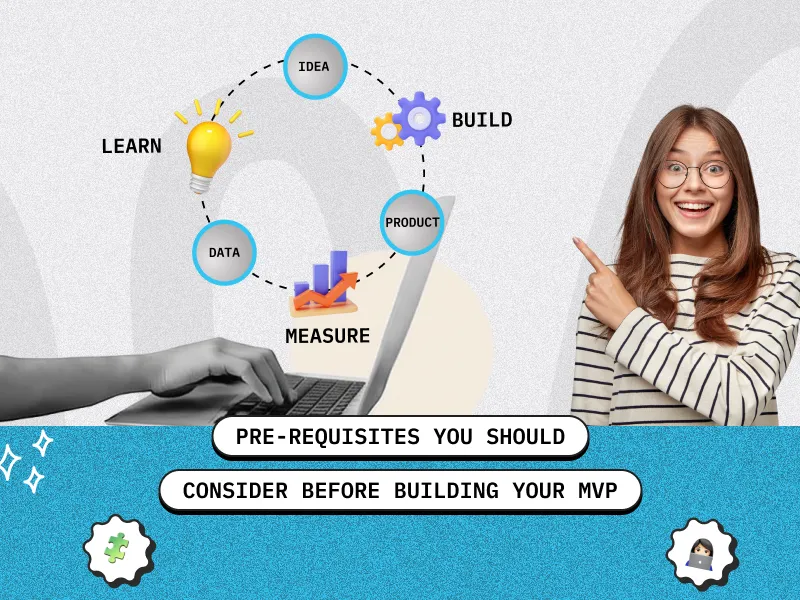
 Canada
 Hong Kong
 Global





 Love we get from the world