

HIPAA Compliance Automation
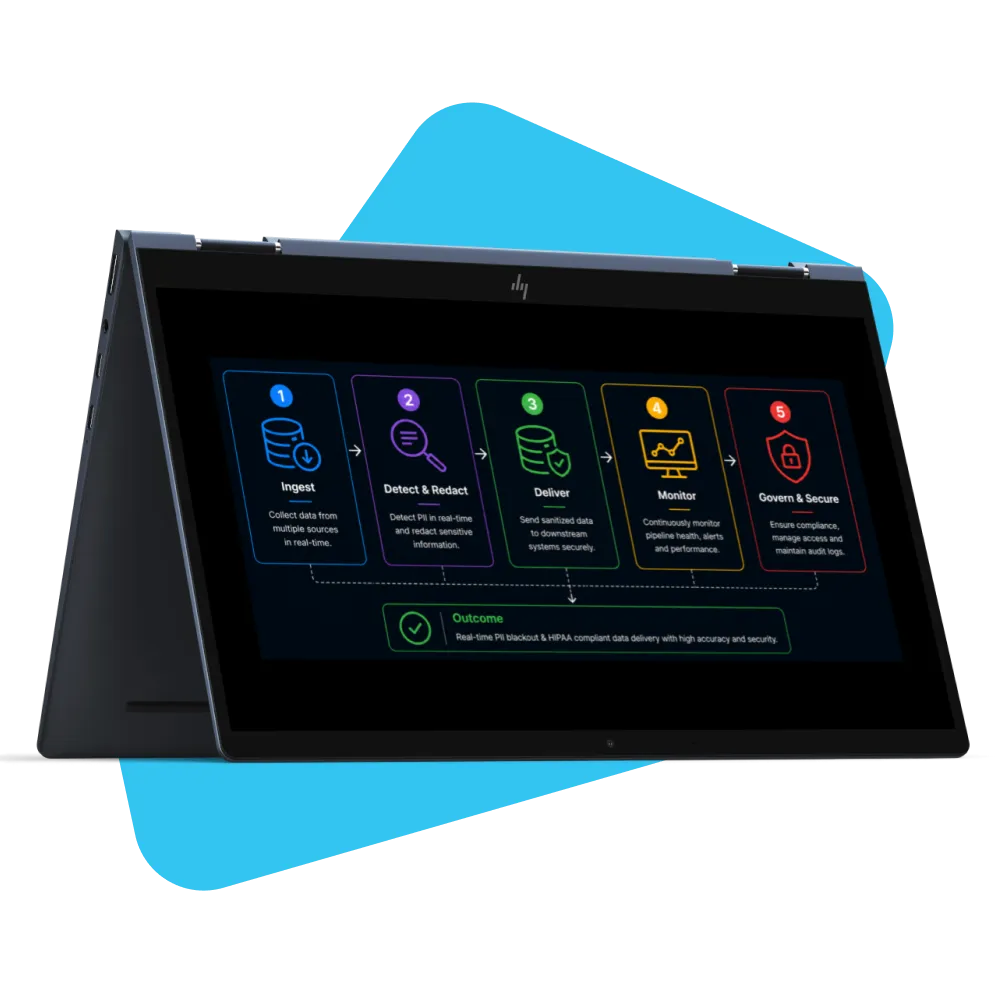
Building an Automated Privacy Layer for Healthcare Microservices. Our team engineered the "PII Blackout" Pipeline to transform how healthcare organizations handle sensitive data in their observability streams. By moving beyond passive monitoring and implementing a "Real-time Redaction Engine," we eliminated the risk of patient data exposure in developer logs. For healthcare teams handling sensitive application data, this project shows how DevSecOps compliance automation can turn privacy controls, redaction workflows, and audit evidence into part of the engineering pipeline. We approached the project by first identifying critical PII leak points in the application lifecycle before automating a secure, sub-second redaction workflow that masks Social Security Numbers and patient names before they hit permanent storage.
 Remote
5K – 10K USD
2 - 3 Months
Web
About the Project
Enforcing Privacy by Design through Real-time Data Loss Prevention (DLP).
The project aimed to solve the “Compliance Gap” in Health-Tech: where developers inadvertently violate HIPAA regulations because sensitive patient data is leaked into application logs during debugging. By focusing on In-Flight Data Inspection, we addressed the risk left by traditional logging systems that store raw, unencrypted data. This made observability safer for engineering teams, especially in environments where observability in DevOps must provide useful logs, metrics, and debugging context without exposing sensitive user data.
The result is a self-healing privacy pipeline that not only detects PII but autonomously “blacks out” sensitive strings, allowing engineers to debug systems without ever seeing a patient’s private information.

Project Challenges
Building this automated redaction environment required solving several unique challenges in the healthcare data lifecycle:


Systemic Compliance Exposure : The client's Node.js and Python microservices were broadcasting real patient names and SSNs directly into Cloud Logging. This created a massive, ongoing HIPAA violation that put the company at extreme legal and financial risk.
Unprotected Observability Streams : Traditional log management was passive. Once PII was written to a log, it was accessible to any engineer with log-viewer permissions. There was no mechanism to stop the data from being recorded in its raw state.
The "Context vs. Privacy" Conflict : Developers needed logs to fix application crashes, but they didn't need the actual SSN. We needed a way to preserve the "shape" of the log for debugging while stripping the "substance" of the sensitive data.
Real-time Latency Requirements : Any security layer added to the logging stream could not delay the application's performance. We needed a system that could inspect and redact data in milliseconds to ensure that the developer experience remained seamless.


How Did We Help?
We approached the development with a phased strategy to close the healthcare compliance gap systematically.
Log Stream Audit
Secure Sink Setup
Pub/Sub Buffering
DLP Integration
In-Flight Redaction
Compliant Storage
Audit Reporting

The outcome
The project emerged as a model for modern Healthcare DevSecOps, replacing manual auditing with a self-healing privacy ecosystem.
- 100% Redaction Rate: Successfully identified and masked all PII patterns across 15+ microservices.
- Risk Elimination: Reduced the compliance exposure window from weeks of “stale logs” to zero.
- HIPAA Audit Ready: Automated the generation of privacy reports, making the client ready for SOC2 and HIPAA audits instantly.
Seamless Integration: The pipeline was deployed with zero changes required to the existing application codebase, providing an immediate security upgrade.

Olivia Morgan
“The PII Blackout project solved our single biggest compliance headache. We no longer have to worry about what our developers might accidentally see in the logs. The system is fast, invisible, and most importantly, it gives us the confidence that we are protecting our patients' data at every level of our stack.”