

 Lets Talk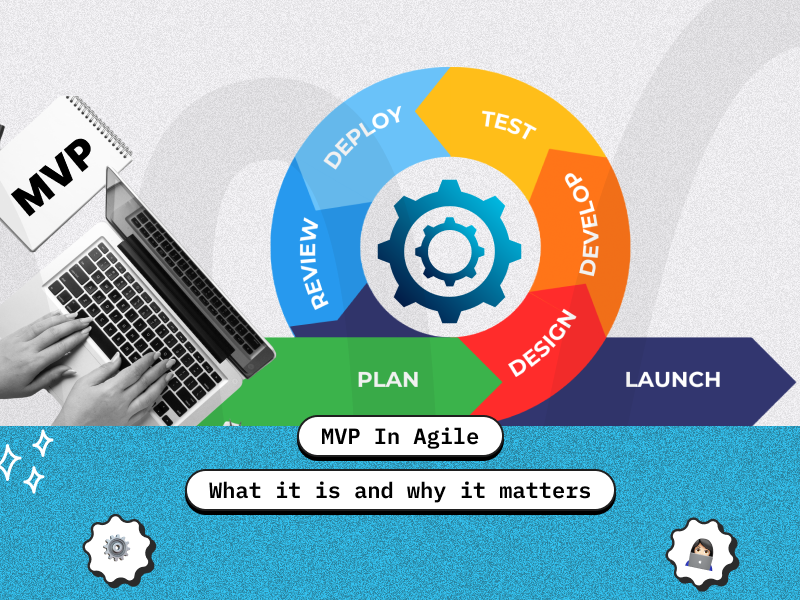
TL;DR:
- MVP is the simplest version of a product built with only core features to validate ideas quickly.
- Agile development uses iterative sprints to continuously build, test, and improve the MVP.
- Combining MVP with Agile helps teams launch faster and reduce development risks.
- Real user feedback plays a crucial role in refining the product and achieving product-market fit.
- The Build → Measure → Learn loop enables continuous improvement and smarter product decisions.
Introduction
In today’s fast-paced digital landscape, building a successful product is not just about having a great idea, it’s about validating it quickly and efficiently. Many startups fail because they invest heavily in full-featured products without confirming real user demand, which is why following a structured approach like this MVP development guide can help teams move in the right direction. This is where MVP in Agile development becomes essential.
By combining Minimum Viable Product (MVP) with Agile methodology, teams can launch faster, gather real user feedback, and continuously improve through iterative development. Instead of aiming for perfection, Agile MVP focuses on delivering value early and refining the product based on real-world insights.
This approach not only reduces development risks but also helps businesses achieve better product-market fit by aligning product features with actual user needs. For startups and product teams, adopting MVP in Agile is a practical and proven way to build scalable, user-focused products with confidence.
What is MVP in Agile Development?
A Minimum Viable Product (MVP) is the simplest version of a product built with only the essential features needed to solve a core user problem. Instead of investing months in full-scale development, teams launch an MVP to validate ideas quickly and efficiently, and understanding the meaning of MVP in business helps clarify its role in modern product development.
In Agile development, MVP is built through short, iterative cycles called sprints. Each sprint delivers a small, functional part of the product, allowing teams to gather feedback and make improvements continuously.
Unlike traditional development approaches that aim for perfection before launch, MVP in Agile focuses on learning through real-world usage. It helps teams answer critical questions:
- Does the product solve a real problem?
- Are users willing to use or pay for it?
- What features should be improved or removed?
In simple terms, MVP in Agile means building a product step-by-step while validating it with real users at every stage.
Why Agile Teams Use MVP for Faster Product Validation
Agile teams rely on MVP development because it aligns with their goal of delivering value quickly while minimizing risks.
Faster Time to Market
MVP enables teams to launch products quickly rather than waiting for full-scale development. This early release helps businesses enter the market sooner, test their ideas in real conditions, and stay ahead of competitors.
Reduced Development Cost
By prioritizing only essential features, MVP development eliminates unnecessary work. This approach helps teams use resources efficiently while avoiding the cost of building features that users may not need.
Lower Risk of Failure
A significant number of products fail due to lack of market demand. MVP helps reduce this risk by validating ideas early, ensuring that the product solves a real problem before further investment. This is especially important for new businesses, as explained in MVP development for tech startups.
Early User Feedback
Real user feedback is one of the most valuable aspects of MVP development. It provides actionable insights that help teams refine features, improve usability, and align the product with user expectations, which is why understanding the importance of user feedback in MVP development is essential.
Better Product-Market Fit
Continuous feedback and iteration allow the product to evolve based on real user behavior. This increases the chances of achieving strong product-market fit and long-term success.
Key Principles of MVP in Agile Methodology
Successful MVP development in Agile is driven by core principles that ensure teams deliver real user value efficiently while continuously improving the product.
Focus on Core Features
The success of an MVP depends on identifying and building only the most critical features that solve the user’s primary problem. By avoiding unnecessary functionality, teams can reduce complexity, accelerate development, and validate ideas faster, which is why learning how to define MVP scope effectively is essential.
Iterate in Sprints
Agile teams work in short, time-boxed cycles known as sprints. This iterative approach allows teams to release updates frequently, respond quickly to feedback, and make continuous improvements without delaying the entire development process.
Validate with Real Users
User validation is at the heart of MVP success. Gathering feedback from real users helps teams understand actual needs, identify usability issues, and ensure the product delivers meaningful value.
Continuous Improvement
An MVP is not a finished product—it evolves through ongoing testing, feedback, and iteration. This approach aligns closely with the Build Measure Learn loop in MVP, which supports continuous learning and product improvement.
These principles ensure that MVP development is efficient, data-driven, and focused on delivering real user value, increasing the chances of long-term product success.
Step-by-Step MVP Development Process in Agile
A structured MVP development process in Agile helps teams efficiently build, launch, and validate products while minimizing risks and maximizing learning.
Identify the Problem and Target Users
Clearly define the problem your product aims to solve and identify your target audience. A deep understanding of user needs ensures the product delivers real value from the start.
Define Core MVP Features
Prioritize features that directly address the primary user problem. Focusing only on essential functionality helps accelerate development and avoid unnecessary complexity, and selecting the right technologies explained in how to choose the right tech stack for your MVP can further improve development efficiency.
Create User Stories and Product Backlog
Break features into user stories and organize them into a prioritized backlog. This enables better planning, collaboration, and efficient sprint execution, often supported by structured MVP project management practices.
Build MVP in Agile Sprints
Develop the product incrementally through short, iterative sprints. Each sprint should deliver a functional update, allowing teams to test and refine the product continuously.
Launch MVP to Early Users
Release the MVP to a limited group of users to validate assumptions and gather real-world feedback as early as possible.
Measure Feedback and Iterate
Use analytics, user feedback, and performance data to improve the product continuously. Applying proven MVP testing strategies helps teams validate results and make data-driven improvements.
This process follows the Build → Measure → Learn cycle, enabling teams to make informed decisions and continuously enhance product quality.
Real-World Examples of MVP in Agile Development
Many successful companies began with a simple MVP to validate their ideas before investing in full-scale development, demonstrating how Agile MVP helps reduce risk and accelerate growth.
Airbnb
Airbnb started with a basic website that allowed users to rent air mattresses in their apartment. This simple MVP helped validate real demand for short-term rentals before expanding into a global marketplace.
Dropbox
Dropbox initially launched with a demo video explaining how the product would work. This MVP approach helped gauge user interest and validate the concept before building the full platform.
Facebook began as a limited platform for college students, allowing the team to test user engagement and refine the product before scaling to a global audience.
These examples highlight how Agile MVP development enables teams to validate ideas early, gather real user feedback, and confidently scale successful products. You can explore more detailed case studies in real MVP product examples.
Common MVP Mistakes in Agile and How to Avoid Them
While MVP development in Agile offers speed and flexibility, common mistakes can slow progress and reduce effectiveness. Understanding these pitfalls many of which are covered in Common MVP mistakes startups make helps teams validate ideas faster and build better products.
Adding Too Many Features
Including unnecessary features increases complexity and delays validation. Focus only on core functionality that delivers immediate user value.
Skipping User Validation
Building without real user feedback can lead to poor product decisions. Always validate assumptions with actual users to ensure the product solves a real problem.
Ignoring Feedback
User insights are critical for improvement. Ignoring feedback defeats the purpose of MVP development and can result in a product that doesn’t meet user expectations.
Long Development Cycles
Agile is built on quick iterations. Long development cycles reduce flexibility and delay feedback, making it harder to adapt and improve.
Not Defining Clear Goals
Without clear objectives, MVP development can lose direction. Setting measurable goals helps teams stay focused and evaluate success effectively.
Avoiding these common mistakes ensures a more efficient development process, faster validation, and better product outcomes.
Conclusion
MVP in Agile is a powerful strategy that enables teams to build products efficiently while minimizing risks. By focusing on essential features, validating ideas early, and continuously improving through user feedback, businesses can create products that truly meet market needs.
The combination of MVP and Agile development supports faster learning, smarter decision-making, and improved product-market fit, especially when guided by experienced teams such as an MVP development company that understands both strategy and execution.
The key to success lies in the Build → Measure → Learn loop continuously testing, refining, and evolving your product.
For startups and product teams, adopting MVP in Agile is not just a development approach it’s a proven framework for building scalable, user-focused, and successful products.
FAQs
1. What is MVP in Agile development?
MVP in Agile is a development approach where a product is built with only core features to validate ideas quickly. Teams use iterative sprints and real user feedback to continuously improve the product, ensuring it solves actual user problems efficiently.
2. Why is MVP important in Agile methodology?
MVP is important in Agile because it helps teams validate product ideas early, reduce development risks, and avoid building unnecessary features. By focusing on core functionality and real user feedback, businesses can make smarter decisions and improve product-market fit.
3. How does Agile support MVP development?
Agile supports MVP development through short sprints, continuous testing, and iterative improvements. This allows teams to release updates quickly, gather feedback from real users, and refine the product step-by-step, making the development process more flexible and efficient.
4. What are the benefits of MVP in Agile?
MVP in Agile offers several benefits, including faster time to market, reduced development costs, early user feedback, and lower risk of failure. It also helps teams achieve better product-market fit by continuously improving the product based on real user needs.
5. What is the cost of MVP development in Agile?
The cost of MVP development in Agile usually ranges from $15,000 to $100,000, depending on product complexity, features, technology stack, and team location. This approach helps businesses validate ideas cost-effectively before full-scale development.








 30 mins free Consulting
 10 min read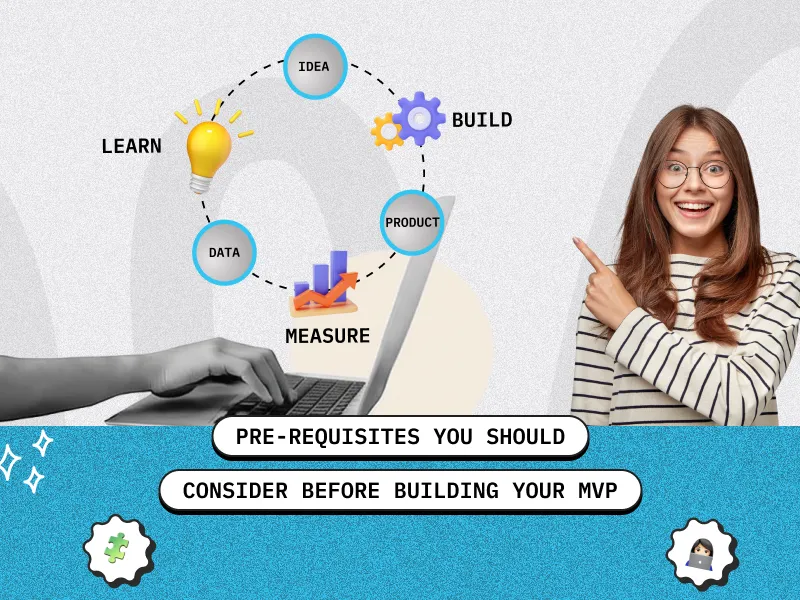
 Canada
 Hong Kong
 Global





 Love we get from the world