
 Lets Talk
TL;DR
- Healthcare MVPs require compliance, security, and domain expertise
- Always hire developers with healthcare experience (not generalists)
- Evaluate based on compliance knowledge, past projects, and security practices
- Expect higher costs due to regulations and integrations
- Follow a structured hiring process to reduce risk
Introduction
Building an MVP is the fastest way to validate a healthcare product idea—but hiring the right developers is where most startups fail. A well-defined MVP development process is essential, especially in healthcare, where even early-stage products must meet strict standards.
Unlike other industries, healthcare products must deal with patient data, strict regulations, and system integrations. A wrong hire can lead to compliance violations, data breaches, or failed product validation.
This guide will help you hire MVP developers specifically for healthcare, with a focus on security, compliance, and scalability.
What Is an MVP in Healthcare?
A healthcare MVP (Minimum Viable Product) is a simplified version of your product built to validate a clinical or patient-focused use case with minimal features.
Why Healthcare MVPs Are Different
- Must comply with regulations like HIPAA and GDPR
- Handle sensitive patient data (PHI)
- Require integration with systems like EHR, telemedicine APIs, or wearables
- Need high security and reliability from day one
Why You Need Specialized Healthcare MVP Developers
1. Regulatory Compliance
Healthcare developers understand:
- HIPAA (USA)
- GDPR (EU)
- Local healthcare laws
They ensure your MVP is compliant from the start—saving future rework.
2. Healthcare Integrations
Experienced developers can work with:
- EHR/EMR systems
- HL7 & FHIR APIs
- Medical devices & telehealth platforms
3. Risk of Hiring General Developers
General developers may:
- Ignore compliance requirements
- Build insecure systems
- Fail to handle healthcare workflows
Result: Legal risks and product failure.
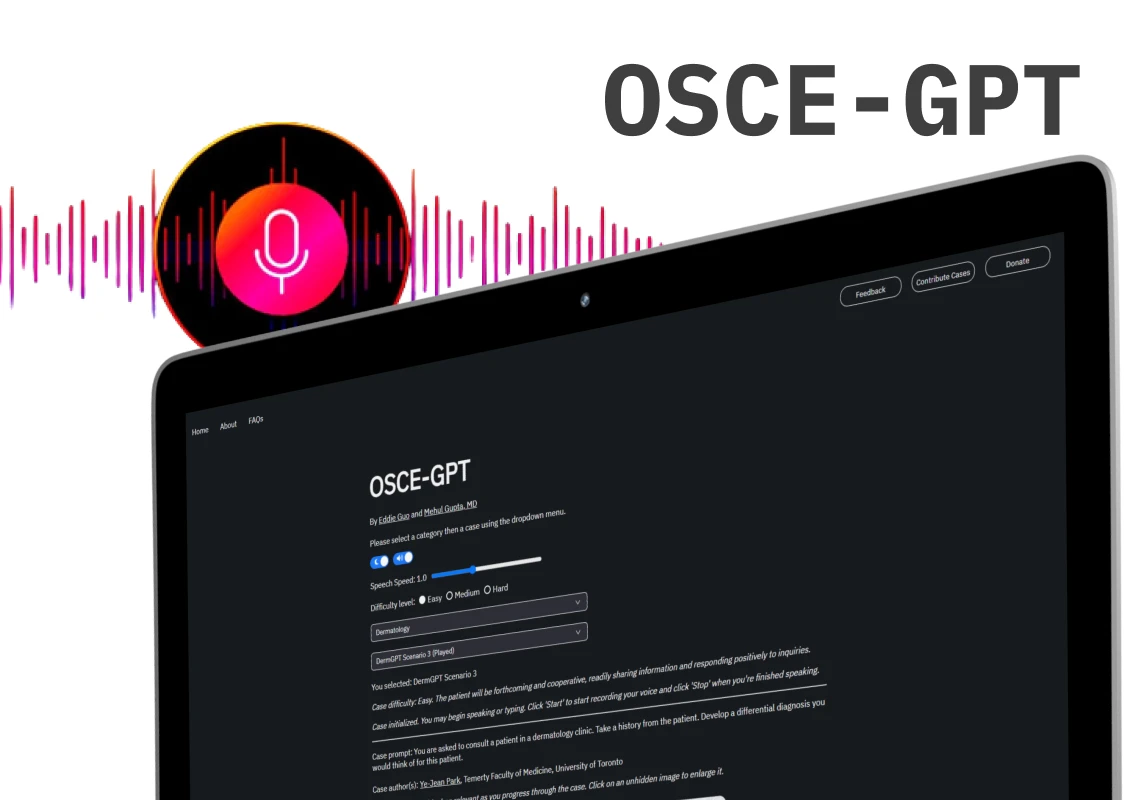
Creole Studios developed OSCEGPT, an AI-driven virtual patient interaction app, to help medical students replicate real-life clinical scenarios safely. Recognizing the strict compliance requirements of the healthcare sector, our team built a secure platform utilizing advanced LLMs to act as virtual patients providing realistic, automated medical feedback. By delivering a highly specialized healthcare MVP, Creole Studios helped students practice diagnostic skills efficiently. This case study perfectly illustrates the importance of hiring developers who deeply understand complex AI integrations and stringent healthcare data standards.
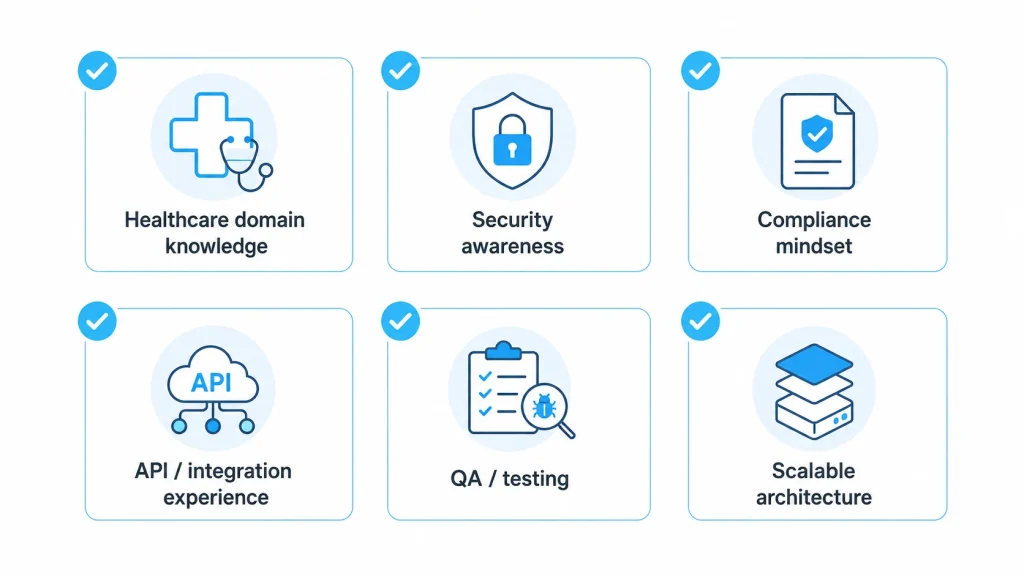
Key Skills to Look for in Healthcare MVP Developers
The following key areas ensure your product is not only functional but also secure, scalable, and aligned with healthcare standards.
Technical Expertise
- Frontend and backend frameworks such as React, Flutter, and Node.js
- Cloud platforms like AWS, Azure, or Google Cloud
- AI/ML capabilities for advanced healthcare use cases
Healthcare Domain Knowledge
- Understanding of clinical workflows
- Experience with EHR systems and healthcare APIs
Compliance Understanding
- Familiarity with HIPAA, GDPR, and data privacy standards
- Knowledge of secure data storage practices
Data Security Expertise
- Encryption for data at rest and in transit
- Authentication and access control mechanisms
Always validate these skills through real project experience and case studies.
How to Evaluate Healthcare MVP Developers
Before hiring, it’s important to understand the key prerequisites before starting MVP development, especially in a sensitive and highly regulated industry like healthcare. The following factors will help you make a reliable decision.
Portfolio Review
Check whether the developer has worked on healthcare products and can provide relevant case studies.
Compliance Experience
Ensure they have experience building compliant systems and understand regulatory requirements.
Security Practices
Assess how they handle data protection, encryption, and secure development processes.
Communication and Domain Understanding
Developers should understand healthcare workflows and communicate effectively about requirements.
Red Flags to Avoid
- No healthcare experience
- Unclear answers about compliance
- Lack of defined security practices
Cost of Hiring Healthcare MVP Developers
Healthcare MVP development costs are higher due to complexity and compliance requirements.
Cost by Hiring Model
- Freelancers: Lower cost but higher risk
- Agencies: Moderate to high cost with better reliability
- In-house teams: Highest cost with full control
Key Cost Factors
- Compliance implementation
- Data security infrastructure
- Third-party integrations, such as EHR systems
Estimated Cost Range
- Basic MVP: $15,000 to $40,000
- Mid-level MVP: $40,000 to $100,000 or more
Costs vary depending on features, integrations, and region.
Step-by-Step Process to Hire MVP Developers for Healthcare
These steps reflect industry best practices used by healthcare startups and digital health teams to ensure safe, scalable, and regulation-ready product development.
1. Define the Clinical Use Case
Begin with a clearly defined clinical or operational problem. In healthcare, vague problem statements lead to misaligned solutions and compliance gaps. Involve domain experts (such as clinicians or healthcare consultants) to validate that the use case is realistic, valuable, and aligned with actual workflows.
2. Set Compliance Requirements
Compliance should be defined at the planning stage—not after development begins. Identify applicable regulations (e.g., HIPAA, GDPR, or local healthcare laws) and document requirements around data handling, storage, and access. Experienced teams often create a compliance checklist or consult legal experts to avoid costly rework later.
3. Finalize MVP Scope
A well-defined MVP scope in healthcare must balance speed with safety. Focus only on essential features that validate your idea while ensuring patient data is handled securely. Avoid overbuilding, but do not compromise on compliance or security-critical components.
4. Set a Realistic Budget
Healthcare development costs are typically higher due to regulatory and security requirements. Your budget should account for secure infrastructure, compliance implementation, third-party integrations (like EHR systems), and potential audits. Underestimating costs often leads to shortcuts that increase long-term risk.
5. Shortlist Healthcare Developers
Prioritize developers or agencies with proven healthcare experience. Look for portfolios that include compliant systems, EHR integrations, or regulated environments. Verified case studies and client references add credibility and reduce hiring risk.
6. Conduct Domain-Specific Interviews
Go beyond generic technical interviews. Ask candidates to explain how they’ve handled compliance, secured patient data, integrated with healthcare systems, and incorporated patient feedback as an important factor in past projects. Strong candidates will provide clear, experience-backed answers rather than relying on theoretical knowledge.
7. Run a Paid Pilot Project
A paid pilot project is a practical way to validate expertise. Assign a small, real-world task that includes elements of security or compliance. This helps assess not only technical skills but also how well the developer follows healthcare best practices under real conditions.
8. Sign NDA and BAA
Legal agreements are critical in healthcare. NDAs protect confidential business information, while BAAs (where applicable) define responsibilities for handling protected health information. This step reflects a mature, compliance-first approach followed by experienced healthcare organizations.
9. Secure Onboarding
Onboarding should follow strict security protocols. Provide controlled access to systems, implement role-based permissions, and ensure developers follow secure development practices. Teams with strong security maturity often use audit logs, access monitoring, and defined data handling policies from day one.
By following this structured, experience-driven approach, you reduce risks, ensure compliance, and increase the chances of building a healthcare MVP that is both trustworthy and scalable.
Common Mistakes to Avoid When Hiring Healthcare MVP Developers
1. Hiring Non-Healthcare Developers
They may lack:
- Compliance understanding
- Domain knowledge
2. Ignoring Compliance Early
Fixing compliance later is:
- Expensive
- Time-consuming
3. Underestimating Security Costs
Security is not optional in healthcare—it’s foundational.
4. Skipping Pilot/Testing Phase
Skipping MVP testing:
- You risk poor quality delivery
- Misalignment with requirements
Conclusion
Hiring MVP developers for a healthcare product requires more than technical evaluation—it demands deep domain expertise, compliance awareness, and strong security practices.
The right developers will not only build your product but also ensure it is safe, scalable, and legally compliant from day one.
Invest time in evaluation, validate through small projects, and prioritize experience over cost. In healthcare, cutting corners can be far more expensive in the long run.
Ultimately, your development partner plays a critical role in shaping both the product and its long-term success. If you want to build an MVP in healthcare, choose the right MVP development company that understands industry requirements and can deliver with confidence.
FAQs
Q. How long does it take to build a healthcare MVP?
It typically takes between 2 to 6 months depending on complexity and compliance requirements.
Q. Do MVP developers handle compliance?
Experienced developers can implement compliance requirements, but legal consultation is recommended.
Q. What tech stack is best for a healthcare MVP?
Common choices include React or Flutter for frontend, Node.js or Python for backend, and AWS or Azure for cloud infrastructure.










 30 mins free Consulting
 10 min read

 Canada
 Hong Kong
 Global





 Love we get from the world