
 Lets Talk
TL;DR
- A tech stack is the combination of technologies used to build and run your product.
- Choosing the right stack for your Minimum Viable Product (MVP) directly affects development speed, scalability, and costs.
- Startups should prioritize speed, simplicity, and developer familiarity when building an MVP.
- Popular MVP stacks in 2026 include MERN, Next.js + Node.js, Python + React, Ruby on Rails, and Flutter with Firebase.
- Avoid overengineering your MVP. Focus on building fast, validating the idea, and iterating based on user feedback.
Introduction
For startups, building a Minimum Viable Product (MVP) is the fastest way to validate an idea, test product-market fit, and attract early users or investors. However, one of the most important decisions in the MVP development process is selecting the right tech stack.
The technologies you choose influence development speed, product performance, scalability, maintenance costs, and future development flexibility. Because of this, choosing the right stack becomes a critical step in ensuring that your MVP can be built efficiently while still supporting future growth.
Choosing the wrong stack can slow development, increase costs, or create technical limitations later. In this guide, we’ll explore how to choose the right tech stack for your startup’s MVP in 2026, the best technologies startups are using, and the common mistakes founders should avoid.
What Is a Tech Stack (And Why Does It Matter for MVPs?)
A tech stack refers to the set of programming languages, frameworks, databases, and infrastructure tools used to build and run a software product.
It typically consists of several layers working together to deliver functionality to users.
For startups building an MVP, the tech stack plays a crucial role because it determines how quickly and efficiently the product can be built and tested.
Core Components of a Tech Stack
A modern web application tech stack usually includes four main components:
Frontend
The frontend is the user interface of the application — what users interact with.
Popular frontend technologies include:
- React
- Next.js
- Vue.js
- Angular
These frameworks enable MVP development teams to build responsive and interactive user experiences.
Backend
The backend handles business logic, APIs, and server-side operations.
Common backend technologies include:
- Node.js
- Django
- Ruby on Rails
- FastAPI
The backend communicates with the database and processes application requests.
Database
The database stores application data such as user accounts, transactions, and content.
Common databases include:
- PostgreSQL
- MongoDB
- MySQL
- Firebase Firestore
The choice depends on the type of data and scalability needs.
Infrastructure
Infrastructure includes the systems that host and deploy the application.
Common infrastructure tools include:
- AWS
- Vercel
- Google Cloud
- Docker
These platforms ensure your application runs smoothly and scales as users grow.
How the Tech Stack Impacts MVP Development
The right tech stack can:
- Speed up development
- Reduce costs
- Enable faster product iteration
- Simplify scaling later
For MVPs, the goal isn’t building the perfect system — it’s building quickly and validating the idea with real users.
Key Factors for Choosing the Right MVP Tech Stack
Selecting the right tech stack is one of the most important things to consider before building an MVP, as it directly affects scalability, speed, and development cost.
Product Requirements and Core Features
Every startup product has unique requirements.
For example:
- A real-time messaging app needs WebSockets or real-time infrastructure.
- An AI platform requires machine learning frameworks.
- A marketplace platform needs robust backend APIs.
Start by defining the core features of your MVP, then choose technologies that support them efficiently.
Development Speed and Time-to-Market
Speed is critical for startups.
Launching your MVP within 3–6 months allows startups to quickly collect MVP user feedback and improve the product based on real user insights.
Frameworks that enable faster development include:
- Ruby on Rails
- Next.js
- Django
These tools provide built-in features that reduce development time.
Scalability for Future Growth
While MVPs should focus on simplicity, the tech stack should still allow future scalability.
Technologies like:
- Node.js
- PostgreSQL
- React
are widely used and scalable enough for growing products.
The key is choosing a stack that supports future product expansion without major rewrites.
Development Team Expertise
A tech stack should align with your team’s experience.
If your developers specialize in JavaScript, a stack like MERN or Next.js with Node.js makes more sense than adopting unfamiliar technologies.
Choosing technologies your team already understands can:
- Reduce development time
- Lower the risk of errors
- Improve product quality
Budget and Infrastructure Costs
Startups often operate with limited budgets, so keeping the MVP Development Cost under control is important. Some tech stacks require more expensive infrastructure or specialized engineers.
Cost-effective options for MVPs include:
- Firebase
- Supabase
- Serverless platforms
- Open-source frameworks
These reduce initial infrastructure and maintenance costs.
Community Support and Ecosystem
Technologies with strong communities provide:
- Better documentation
- More learning resources
- Faster problem solving
Popular technologies like React, Node.js, and Python have large developer communities and long-term support.
Security and Compliance Requirements
If your product handles sensitive data such as:
- financial transactions
- healthcare information
- personal user data
then security and compliance become critical.
Frameworks with strong security features and best practices are important for such applications.
Creole Studios developed Alertzy, an AI-powered server health monitoring assistant, which required a highly reliable and scalable technological foundation. The platform needed to securely track highly technical server data like CPU usage, memory leaks, and disk I/O while presenting it simply through an NLP chatbot. Our experts chose a robust tech stack of ReactJS, NodeJS, and PostgreSQL to seamlessly process massive amounts of heavy, real-time metrics without crashing. This case study perfectly exemplifies how choosing the right tech stack enables a startup to handle complex backend data effortlessly.
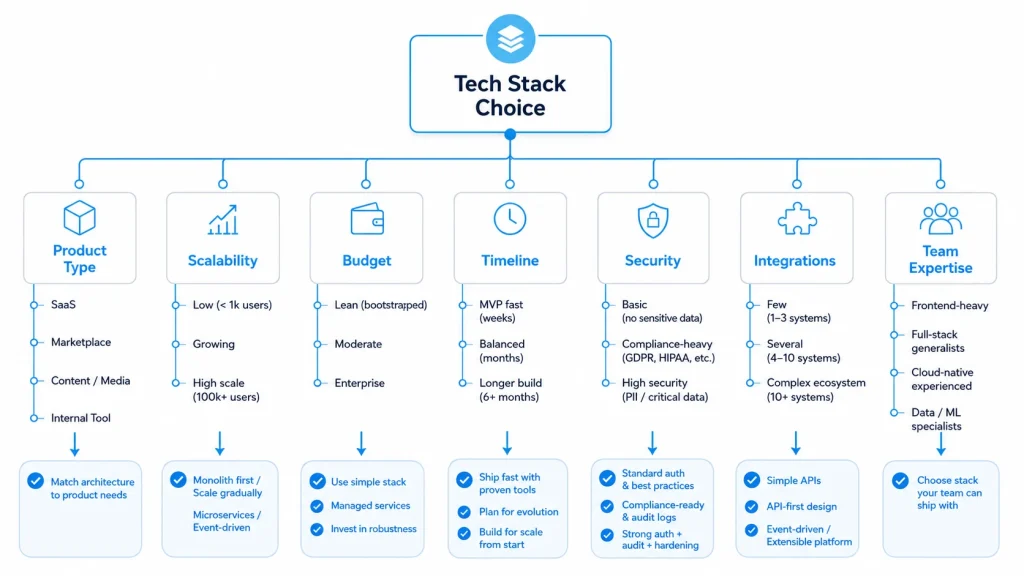
Choose the Right Tech Stack for Your MVP
Compare technology options based on product type, budget, timeline, scalability, and technical needs.

Best Tech Stacks and Technology Trends for Startup MVPs in 2026
In 2026, startups are prioritizing speed, flexibility, and developer productivity when selecting technologies.
Here are some of the most popular tech stacks used for MVP development.
Popular MVP Tech Stacks Used by Startups
MERN Stack
The MERN stack includes:
- MongoDB
- Express
- React
- Node.js
This stack uses JavaScript across the entire application, which simplifies development and speeds up MVP launches.
It’s commonly used for:
- SaaS products
- marketplaces
- web platforms
Next.js + Node.js + PostgreSQL
This stack is widely used for modern web applications.
Next.js provides server-side rendering and improved performance, while PostgreSQL offers a reliable relational database.
It’s a great option for startups building scalable SaaS platforms.
Python (Django or FastAPI) + React
Python frameworks are popular for startups building:
- AI products
- data-driven platforms
- analytics tools
Django provides rapid development capabilities, while FastAPI is known for high-performance APIs.
Ruby on Rails + PostgreSQL
Ruby on Rails has long been a favorite among startups because of its rapid development capabilities.
It offers built-in tools for authentication, database management, and APIs, allowing teams to build MVPs quickly.
Many successful startups originally launched with Rails.
Flutter or React Native + Firebase
For mobile MVPs, cross-platform frameworks such as Flutter and React Native allow developers to build iOS and Android apps simultaneously.
Firebase provides backend services such as:
- authentication
- databases
- cloud functions
This stack significantly reduces development time for mobile startups.
Emerging Tech Stack Trends for MVP Development
Several technology trends are shaping startup development in 2026.
AI-Augmented Development
AI-powered coding assistants are helping developers build software faster by:
- generating code
- automating debugging
- accelerating testing
With AI support, MVP testing is faster and more efficient, helping startups catch issues early.
Serverless Architecture
Serverless platforms allow developers to build applications without managing servers.
Benefits include:
- lower infrastructure costs
- automatic scaling
- simplified deployment
Many startups use serverless services from AWS, Google Cloud, and Vercel.
Backend-as-a-Service (BaaS)
BaaS platforms such as Firebase and Supabase provide ready-to-use backend functionality.
These platforms handle:
- authentication
- databases
- storage
- APIs
This allows startups to focus more on product development instead of infrastructure.
Edge and Real-Time Applications
Modern applications increasingly rely on real-time data processing.
Edge computing and real-time infrastructure enable faster response times and better user experiences for applications such as:
- messaging platforms
- collaborative tools
- gaming applications
Recommended Tech Stack Based on Startup Product Type
Different startup products require different technology choices.
Here are common tech stack recommendations based on product type.
SaaS Startup MVP
For effective SaaS MVP Development, startups often rely on the following tech stack:
- Next.js or React
- Node.js
- PostgreSQL
- AWS or Vercel
This combination offers scalability and strong API support for SaaS platforms.
AI Startup MVP
Typical stack:
- Python (FastAPI or Django)
- React or Next.js
- AI APIs or machine learning frameworks
- vector databases
Python remains the dominant language for building AI-powered products.
Marketplace MVP
Typical stack:
- React or Next.js
- Node.js backend
- PostgreSQL database
- real-time messaging tools
Marketplace products require scalable backend systems and reliable data management.
Mobile App MVP
Typical stack:
- Flutter or React Native
- Firebase or Supabase
- Node.js backend
These tools allow startups to launch mobile applications quickly across platforms.
MVP Tech Stack Comparison Table
| Tech Stack | Development Speed | Scalability | Best For |
| MERN | Fast | High | Web apps, SaaS |
| Next.js + Node | Fast | High | SaaS platforms |
| Python + React | Moderate | High | AI and data platforms |
| Ruby on Rails | Very fast | Moderate | Startup MVPs |
| Flutter + Firebase | Very fast | Moderate | Mobile apps |
This comparison helps startups evaluate which stack best matches their product goals and team capabilities.
Common Mistakes Startups Make When Choosing a Tech Stack
Choosing the wrong technologies can slow down product development.
Here are common mistakes founders should avoid.
Overengineering the MVP
Some startups try to build complex architectures from the beginning.
MVPs should prioritize simplicity and speed, not perfect scalability.
Choosing Trendy Technologies Instead of Practical Ones
Not every trending technology is suitable for your product.
Startups should choose tools that:
- solve real product needs
- support rapid development
- align with developer expertise
Ignoring Developer Availability
Using rare or niche technologies can make hiring developers difficult later.
Popular technologies provide easier access to talent.
Not Planning for Future Scalability
While MVPs should be simple, the tech stack should still support future growth and feature expansion.
To avoid these and other pitfalls, check out our full guide on Mistakes Startups Make When Building Their MVP.
How to Choose the Right Tech Stack for Your MVP (Step-by-Step Framework)
Here is a practical framework for selecting the best tech stack for your startup.
Step 1: Define Your MVP’s Core Features
List the essential features required to validate your idea.
Avoid unnecessary functionality at this stage.
Step 2: Select a Suitable Frontend Framework
Choose a frontend framework that supports fast UI development and strong performance.
React and Next.js are popular options for startups.
Step 3: Choose the Backend and API Architecture
Select a backend technology capable of handling business logic and integrations.
Node.js, Django, and Rails are common choices.
Step 4: Select the Right Database
Choose a database based on your data structure and scalability needs.
Relational databases like PostgreSQL work well for many startup applications.
Step 5: Decide Hosting, Deployment, and DevOps Setup
Choose reliable infrastructure that allows easy deployment and scaling.
Platforms like AWS, Vercel, and Docker simplify application deployment.
Conclusion
Choosing the right tech stack is crucial when building a startup MVP. The ideal stack enables rapid development, faster launches, cost efficiency, and scalability as the product grows. Rather than chasing trendy technologies, startups should prioritize simplicity, speed, and leveraging developer expertise. By carefully selecting the right combination of frameworks, databases, and infrastructure, founders can build an MVP that effectively validates their idea while laying a strong foundation for future growth.
Working with a skilled MVP development company can provide the expertise needed to select the right tech stack and accelerate your product’s launch.
FAQs
Q1: How do I choose a tech stack for my MVP?
Focus on speed, simplicity, and your team’s expertise. Pick technologies that support core features and future scalability.
Q2: Can I change my tech stack later?
Yes, but it can be costly and time-consuming. Choose flexible and modular technologies to minimize migration issues.
Q3: Should I use low-code or no-code tools for an MVP?
They can speed up early validation but may limit customization. Best for non-technical founders or simple product ideas.
Q4: How important is developer familiarity?
Very important. Using technologies your team knows reduces errors, speeds up development, and improves product quality.
Q5: Does the tech stack affect investor confidence?
Yes, investors prefer proven, maintainable stacks. A reliable stack shows your team can scale the product efficiently.
Q6: How can I balance speed and quality in an MVP?
Prioritize essential features and frameworks with built-in best practices. Avoid overengineering while keeping code maintainable.










 30 mins free Consulting
 10 min read

 Canada
 Hong Kong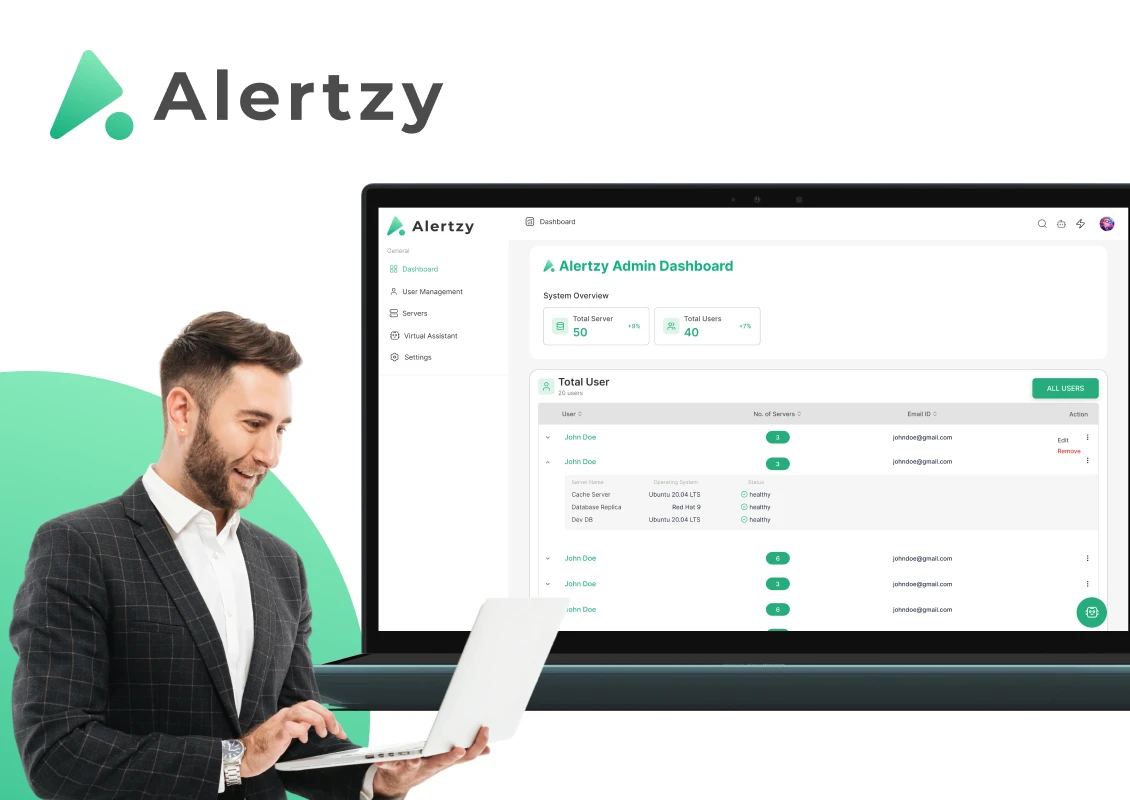
 Global





 Love we get from the world