

 Lets Talk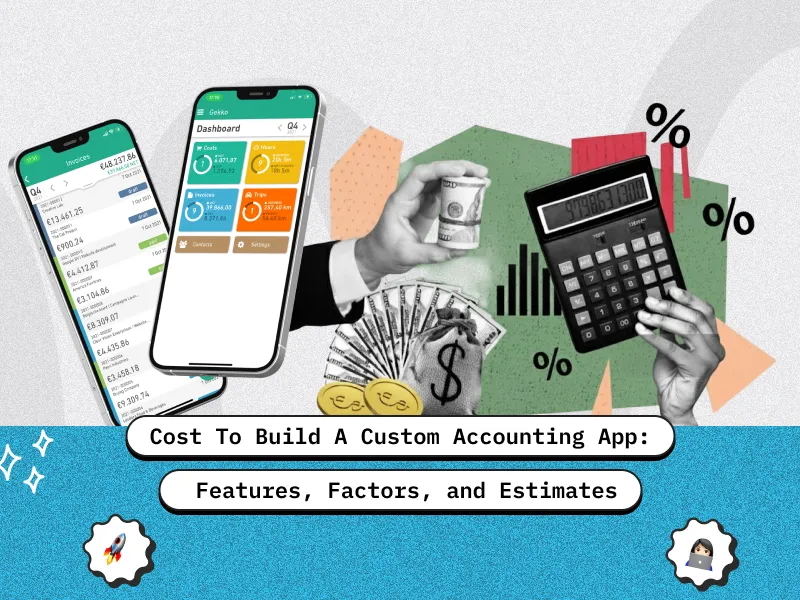
TL;DR
- Why custom accounting apps matter: Enterprises need tailored solutions for multi-entity operations, multi-currency transactions, compliance automation, and AI-driven insights—beyond what off-the-shelf tools like QuickBooks or Xero offer.
- Key features: Core modules include general ledger, invoicing, expense and payroll management, reporting dashboards, and multi-user role access; advanced features add AI forecasting, anomaly detection, automated tax compliance, ERP integrations, and blockchain-based audit trails.
- Development essentials: Success depends on secure databases, cloud infrastructure, API integrations, AI/ML capabilities, and adherence to compliance and security frameworks.
- Cost estimates: Basic apps range $35K–$50K, mid-level $50K–$80K, and advanced enterprise solutions $80K+, influenced by features, integrations, and advanced technologies like AI and blockchain.
- Creole Studios’ advantage: Provides end-to-end development with MVP-first approach, enterprise-grade security, seamless system integrations, AI enhancements, and ongoing support for scalable, compliant financial solutions.
Introduction
For many small businesses, off-the-shelf accounting software like QuickBooks or Xero works just fine. However, as enterprises grow and financial operations become more complex, these ready-made solutions often fall short. Larger organizations need custom accounting apps that provide advanced automation, compliance readiness, and AI-driven insights.
Custom accounting software is not just about recording numbers it’s about building a financial management system tailored to your specific workflows, regulations, and integration requirements. In this blog, we will explore why enterprises need custom accounting apps, what powers them, key features, development cost estimates, and how partnering with a Mobile App Development Company like Creole Studios helps businesses build solutions that are secure, scalable, and future-ready.
Why Custom Accounting Apps Matter Today
Every business needs accounting software, but not every business can rely on the same tool. Off-the-shelf solutions like QuickBooks, FreshBooks, or Xero are designed for small to mid-sized businesses. They offer convenience and affordability, but they are limited when it comes to scalability, regulatory compliance, or handling complex workflows.
Enterprises, especially those operating across multiple countries or industries, require far more than standard features. They need applications that can manage multi-currency transactions, multiple business entities, industry-specific tax rules, advanced reporting, and integration with existing ERP or CRM systems.
Benefits of custom accounting apps for enterprises
- Higher accuracy. Automated calculations reduce human error and ensure data consistency across large financial datasets.
- Compliance automation. Custom apps can be designed to meet specific tax and audit requirements for different countries, which saves time and avoids penalties.
- Audit readiness. Built-in audit trails and transparent reporting ensure financial accountability at every step.
- Data-driven decision-making. Advanced analytics and forecasting allow finance teams to predict trends, optimize cash flow, and mitigate risks.
In other words, a custom accounting app is not a luxury for enterprises. It is a necessity for organizations that want efficiency, accuracy, and compliance while managing complex financial ecosystems.
What Powers Custom Accounting App Development
Developing a custom accounting app requires a blend of technology, security, and compliance expertise.
- Secure databases: Financial data is one of the most sensitive types of information a business handles. This is why robust databases with encryption and backup systems are at the core of every accounting app.
- Cloud-based infrastructure: Enterprises need scalable systems that allow remote access for distributed teams. Cloud deployment ensures flexibility, real-time access, and disaster recovery support.
- AI and machine learning: Artificial intelligence enables predictive analytics, anomaly detection, and fraud prevention. Machine learning algorithms help identify patterns that humans may miss, which improves accuracy in financial forecasting.
- API integrations: Enterprises rarely operate with stand-alone apps. Custom accounting software often integrates with ERP systems like SAP or Oracle, HR systems for payroll, banking systems for reconciliation, and CRMs for revenue tracking.
- Compliance and security frameworks: Applications must comply with international financial reporting standards, GDPR, or country-specific tax regulations. Strong access control, role-based permissions, and secure audit logs are essential.
These building blocks ensure that a custom accounting app does not just handle day-to-day bookkeeping but becomes a strategic tool for enterprise finance teams.
Getting Started with Your First Custom Accounting App
Building a custom accounting solution requires careful planning before any code is written. Here are the steps most enterprises follow:
- Define specific needs: Identify what your business requires beyond standard tools. For example, do you need multi-entity management, support for different currencies, automated tax compliance, or real-time forecasting? Documenting these needs ensures the app is built for your unique workflows.
- Choose deployment type: Decide whether your app will be cloud-based, on-premises, or a hybrid solution. Cloud solutions provide scalability and accessibility, while on-premises may be required for industries with stricter compliance rules.
- Decide integration requirements: Enterprises often already have ERP, HR, and banking systems in place. A custom accounting app should seamlessly integrate with these systems to prevent data silos and improve efficiency.
- Build an MVP first: Instead of attempting a full-scale system right away, start with an MVP that includes core modules such as the general ledger, invoicing, and reporting. This approach allows you to validate functionality and gather user feedback before investing in advanced features.
- Test for accuracy and compliance: Financial apps must be error-free. Rigorous testing for calculation accuracy, data security, and compliance ensures the system is reliable before rolling it out to the entire organization.
Following this process helps enterprises move from idea to implementation in a structured way, reducing risks while ensuring the final product meets both business and compliance goals.
Key Features of Custom Accounting Apps
Core Features
- General Ledger and Chart of Accounts: This forms the backbone of any accounting system. It records every financial transaction and provides a structured view of all accounts. Custom apps allow enterprises to design ledgers aligned with their unique reporting structures.
- Invoicing and Payment Tracking: Automated invoicing reduces manual effort, minimizes delays, and ensures accurate payment tracking. Enterprises can configure invoicing workflows to handle complex billing scenarios such as recurring payments, multi-currency invoices, and dynamic tax rates.
- Expense and Payroll Management: Custom modules can manage employee expenses, reimbursements, and payroll processes. This helps align HR and finance teams and ensures compliance with tax regulations for salaries and benefits.
- Basic Reporting and Dashboards: Even at a foundational level, enterprises need dashboards that provide snapshots of revenue, expenses, profit margins, and cash flow. Custom dashboards allow role-based views so executives, managers, and accountants see the data relevant to them.
- Multi-user Role Access: Enterprises often have large teams handling different financial tasks. Role-based permissions ensure that sensitive data is only accessible to authorized users, improving both security and accountability.
Advanced Features for Enterprises
- AI-Powered Forecasting and Anomaly Detection: Machine learning can predict cash flow trends, highlight unusual transactions, and flag potential fraud. This shifts accounting from being reactive to proactive.
- Automated Tax Compliance and Filing: Enterprises dealing with multiple jurisdictions can use custom apps to automate tax calculations and filings. This reduces the risk of human error and ensures timely compliance with country-specific rules.
- Multi-Entity and Multi-Currency Management: Large organizations often manage multiple business units across countries. Custom accounting apps allow consolidation of financial data, support currency conversions, and provide consolidated reports for decision-making.
- Integrations with ERP, HR, and Banking Systems: Accounting should not work in isolation. Custom apps integrate with other enterprise systems, which reduces duplication and ensures data consistency across departments.
- Advanced Analytics Dashboards: Beyond basic reporting, enterprises need dashboards that allow drill-down analysis of financial performance. These dashboards can highlight profit centers, cost leakages, and financial KPIs at both macro and micro levels.
- Blockchain-Based Audit Trails: Blockchain adds a layer of transparency and immutability to financial records. By using distributed ledgers for audit trails, enterprises can improve trust, especially in industries where accountability is critical.
With these features, a custom accounting app evolves from being a bookkeeping tool into a full-fledged financial intelligence system.
Cost to Build a Custom Accounting App: What to Expect
Building a custom accounting app can cost very differently from one business to another. The final budget depends on the features you need, required security, third-party integrations, and whether you want web, mobile, or both.
Factors influencing cost
- Features and modules: Simple modules like invoicing and expense tracking cost less. Advanced capabilities like AI forecasting, audit automation, or blockchain-based trails increase development cost.
- Integrations: Connecting ERP, HRMS, payment gateways, and banking APIs takes extra time and budget, but improves workflow and data accuracy.
- Security and compliance: Accounting products need strong protection, such as data encryption, role-based access, logs, and compliance controls. These add cost but are essential.
- Platform scope: Building only for web is usually lower cost than building for both web and mobile. Cloud infrastructure is often more scalable and cost-friendly than on-premise systems.
High-Level Cost Estimates
- Basic custom accounting app: $35,000 – $50,000. Core features like ledger, invoicing, expense records, and simple dashboards.
- Mid-level enterprise app: $50,000 – $80,000. Includes payroll, multi-branch or multi-entity support, and standard ERP integrations.
- Advanced enterprise app: $80,000+. Includes AI insights, automated compliance flows, blockchain audit support, and deep analytics.
Actual cost depends on your exact needs and rollout plan. To budget better from day one, many teams use a software development cost calculator to estimate mobile app costs, and it can also help estimate costs for web admin panels and custom backend software.
How Creole Studios Helps Build Custom Accounting Apps
Creole Studios has extensive experience building enterprise applications that handle sensitive data and integrate with multiple systems. When it comes to accounting apps, our focus is on accuracy, compliance, and long-term scalability.
- Requirement Discovery Workshops: We begin by mapping your financial workflows, compliance needs, and integration requirements. This ensures the solution aligns with your business processes from day one.
- MVP-First Approach: Instead of building everything at once, we help enterprises launch with a lean MVP that includes core features. This approach reduces risks and ensures value delivery from the start.
- Enterprise-Grade Security: We implement best practices for financial data protection, including encryption, access controls, and secure audit logs. Our apps are built to pass compliance checks and industry audits.
- Seamless Integrations: Our team has experience integrating with ERP platforms, HR software, and banking APIs. This ensures your accounting system works in harmony with existing enterprise tools.
- Advanced Features and AI: We help enterprises add intelligence to their accounting systems. Whether it is AI-based forecasting, anomaly detection, or compliance automation, we guide you on when and how to add these features strategically.
- Continuous Support and Scaling: Accounting requirements evolve with regulations and business growth. Creole Studios provides ongoing support to keep your application updated, secure, and scalable.
In short, we do not just build accounting apps. We create enterprise-grade financial solutions that improve efficiency, ensure compliance, and support strategic decision-making.
Conclusion
For growing enterprises, basic accounting tools often can’t handle complex finance work, multi-entity setups, and strict compliance rules. A custom accounting app can solve this by adding stronger security, better control, and automation that fits your process. With features like AI forecasting, automated compliance checks, and ERP integration, your finance team can work faster and make better decisions.
Before you start building, it’s important to keep the scope clear and the budget realistic. We can help you choose the right features for version one and plan the best way to launch. Book our 30-minute free consultation to talk through your idea, key features, and next steps.
FAQs
1. Why choose a custom accounting app instead of QuickBooks or Xero?
Off-the-shelf software is designed for small businesses and lacks the flexibility enterprises require. Custom accounting apps provide tailored workflows, compliance automation, and integrations with other enterprise systems.
2. What features are essential in an enterprise accounting app?
Core features include a general ledger, invoicing, expense management, payroll, and reporting. Enterprises often also require multi-entity management, advanced dashboards, and integrations with ERP and banking systems.
3. How secure are custom accounting apps?
Security is one of the top priorities. Custom apps include encryption, access control, secure databases, and audit trails. Enterprises can also include compliance certifications to meet industry regulations.
4. Can they handle multi-entity and multi-currency accounting?
Yes. Custom accounting apps can consolidate financial data from multiple entities, support international transactions, and provide consolidated reports across currencies and regions.
5. How does AI improve accounting accuracy and insights?
AI can detect anomalies, forecast cash flow, and predict financial risks. By analyzing large datasets, AI helps finance teams move from reactive bookkeeping to proactive financial planning.
6. How long does it take to build a custom accounting app?
Timelines vary. A basic system may take 4 to 6 months, while advanced enterprise apps with AI and multiple integrations can take 8 to 12 months.
7. How much does it cost to develop one?
Costs range from $35K to $50K for a basic app, $50K to $80K for mid-level systems, and $80K+ for advanced enterprise apps with AI and compliance automation.
8. Can a custom accounting app integrate with my ERP and banking systems?
Yes. Custom apps can be built to seamlessly integrate with existing ERP, HR, and banking software to streamline workflows and prevent data duplication.
9. Are custom accounting apps compliant with tax and audit regulations?
Yes. Compliance requirements can be built into the system, including automated tax filing, audit trails, and adherence to IFRS or GAAP standards, depending on your region.
10. How can Creole Studios help my enterprise build one?
We offer end-to-end services from requirement discovery to development, integrations, and long-term support. Our focus is on security, compliance, and scalability so your app evolves with your business.








 30 mins free Consulting
 12 min read

 Singapore
 USA
USA 
 Finland





 Love we get from the world