
 Lets Talk
TL;DR
- An MVP (Minimum Viable Product) is the smallest version of a product that tests your core value with real users.
- A practical MVP process looks like: Validate → Scope → Pick MVP type → Plan → Design → Choose stack → Build → Track → Launch → Iterate
- Avoid the most common traps: building too much, skipping analytics, chasing compliments instead of commitment, and “launching” without a learning plan.
- Your MVP output is a plan + a measurable learning goal — not a feature list.
Introduction
If you’re a founder, student, marketer, or first-time builder with an idea but aren’t sure where to start, this guide is for you. Building a product from scratch can feel overwhelming—there are countless features to consider, endless design choices, and pressure to “get it right.” The goal of MVP development services is to help you focus on creating the simplest version of your product that solves a real problem, so you can test your idea, learn from real users, and iterate quickly without wasting time or resources.
By the end of this guide, you’ll have a clear, actionable plan to launch your MVP. You’ll know exactly who your target user is, define a focused scope that prioritizes core functionality, and create a lightweight requirements and build plan. With an analytics-backed approach and iteration loop, you’ll be ready to learn fast and build smarter from day one.
What a Minimum Viable Product Is (and Isn’t)
Simple definition
An MVP is the smallest product version that can test your core value with real users, so you can learn what works before you invest heavily.
Think of it like a scientific experiment:
- Hypothesis: “People with X problem will use/pay for Y solution.”
- MVP: The smallest build that tests that hypothesis.
- Result: Data + feedback that tells you what to do next.
MVP vs Prototype vs Proof of Concept vs Beta
| Concept | Purpose | Audience | Example |
| Proof of Concept (PoC) | Prove something is possible technically | Internal/team | “Can our model classify this reliably?” |
| Prototype | Show how it works (experience/design) | Internal + early feedback | Clickable Figma screens |
| MVP | Prove people want it (value validation) | Real users | A working product with core flow |
| Beta | Improve stability + fix issues at scale | Broader audience | Invite-only release before full launch |
If you’re unsure, default to: MVP = learning with real users.
- Prototype: a quick visual or clickable model to test the user flow and usability (not real functionality).
- Proof of Concept (PoC): a small technical test to prove something can be built (performance, feasibility, integration).
- Beta: a limited release of a product that already delivers value, used to find bugs and polish before a wider launch.
- Key difference: Beta is for stabilizing a product that’s already valuable; MVP is for proving value exists.
Common MVP myths (and the truth)
Myth 1: “MVP = buggy product.”
Truth: MVP should be minimal, not broken. It must deliver the core value reliably enough to learn.
Myth 2: “MVP = only for tech startups.”
Truth: Any new product, service, feature, or business model can MVP—courses, agencies, ecommerce, SaaS, marketplaces, internal tools.
Myth 3: “MVP = build fast without planning.”
Truth: MVP requires more clarity, not less. If you don’t define the user/problem/success, you’ll build noise.
Why MVP Development Is Critical for Startups
MVP development is critical because it reduces uncertainty fast—so you don’t burn months (and runway) building the wrong thing.
- Reduce risk (market/product/tech): The biggest startup risk is demand. CB Insights found “no market need” in ~42% of failed startups, which is exactly what an MVP is designed to validate early (problem, audience, willingness to adopt/pay).
- Save time + money (avoid expensive rework): Smaller MVP bets help you catch wrong assumptions sooner. IBM’s NIST-cited breakdown shows defects can cost up to ~30× more after release than if found during design/architecture—so MVPs reduce costly rebuilds by learning earlier.
- Speed up learning loops (growth): MVPs shorten the cycle from idea → feedback → iteration, helping you improve activation, retention, and time-to-value faster—because you’re iterating with real user behavior, not opinions.
What to include in the MVP (important): focus on one core user, one painful job-to-be-done, and one success metric (e.g., activation rate, retention, or time-to-value). Everything else goes into the backlog until the core value is proven.
How MVP Development Works
The MVP process is a loop:
Validate → Build → Measure → Learn → Iterate (the build–measure–learn loop)
At the MVP stage, success = learning, not revenue.
Revenue can be a strong signal, but the real win is confirming:
- Who your best users are
- Which problem is urgent enough
- Which core flow creates value
- What drives repeat usage or willingness to pay
Phase 1 — Foundations (Before You Build)
Before You Build: The 3 Things You Must Define
1) Target user (ICP) — who exactly is this for?
Your MVP fails when it’s “for everyone.” Define an Ideal Customer Profile:
- Role: founder / recruiter / student / creator / ops manager
- Context: small team / enterprise / remote / budget constraints
- Current workaround: spreadsheets / WhatsApp / Notion / agency
- Trigger moment: “I need this now because…”
ICP template (quick):
“We help [specific user] who struggles with [pain] in [context], so they can achieve [outcome].”
2) Problem statement — what pain are you solving?
A strong problem statement is measurable and specific:
- What’s happening now?
- Why does it hurt?
- What do they do today instead?
Example:
“Freelance designers waste 3–5 hours/week chasing feedback across email and chat, causing missed deadlines and client frustration.”
3) Success outcome — what change should users experience?
Define the outcome in plain language:
- Faster? cheaper? simpler? more accurate? less stressful?
Outcome example:
“Collect client feedback in one place and finalize designs 2x faster.”
If you can’t explain the outcome in one sentence, your MVP scope will explode later.
Phase 2 — Step-by-step MVP Process
Step 1 — Validate the Idea (Before Development)
Before building, validate with speed and honesty.
Fast validation methods (pick 1–2)
Start with a few MVP testing strategies that give you real signals fast.
1) Landing page + waitlist
- Put the promise + target user + outcome on one page
- Add a waitlist form (“Get early access”)
- Drive small traffic (communities, LinkedIn, cold outreach)
- Measure: conversion rate + quality of signups
2) User interviews (10–15 calls)
Goal: confirm pain, urgency, and current alternatives.
3) Competitor research + gap analysis
- Who already serves this user?
- What do users complain about in reviews?
- What’s missing for your ICP specifically?
4) Pre-sales / pilots
The strongest signal: someone commits time/money.
- Pre-sell at a discount
- Offer a pilot with clear deliverables
- Ask for a letter of intent (LOI)
Interview question set (beginner-friendly)
Use open-ended questions:
- “Walk me through how you do this today.”
- “What’s the hardest part?”
- “What have you tried before?”
- “What happens if you don’t solve it?”
- “How often does this happen?”
- “If I could fix one part, what would you choose?”
- “Would you pay for a solution? What would be fair?”
Validation signals that matter (commitment > compliments)
Look for actions that build credibility, not just positive feedback.
Weak signals:
- “Nice idea!”
- “I would use it sometime.”
Strong signals:
- They ask “When can I try it?”
- They introduce you to others
- They agree to a pilot
- They pay / pre-pay
- They give detailed constraints and requirements (real pain shows detail)
Go/No-Go checklist
Go if:
- The pain is frequent and urgent
- Users have current workarounds
- You can define a clear MVP core flow
- You can reach early users reliably
No-go (for now) if:
- Users are indifferent
- Problem is rare or “nice-to-have”
- You can’t identify a reachable ICP
- The solution depends on building many features before it’s useful
Step 2 — Define the MVP Scope (Build the Minimum)
Scope is where most MVPs die — usually because of mistakes startups make when building an MVP
Choose ONE core user journey (north-star flow)
Your MVP should do one job extremely well.
North-star flow format:
- User arrives with problem
- They take 2–5 key actions
- They get the promised outcome
- They have a reason to return
Example (generic):
- Sign up → Create first item → Get result → Save/share → Return for next use
Feature prioritization (simple frameworks)
MoSCoW
- Must-have: required for core flow
- Should-have: helpful but not required
- Could-have: nice-to-have
- Won’t-have (now): explicitly excluded
RICE (keep it simple)
- Reach: how many users impacted
- Impact: how big the impact is
- Confidence: how sure you are
- Effort: time/complexity
If a feature is high-effort and low-confidence early on—cut it.
What to cut first (scope creep prevention)
Cut:
- Dashboards that don’t drive decisions
- Advanced roles/permissions
- Multi-language, multi-currency, multi-platform
- “Admin panels” unless required
- Edge-case features
MVP scope checklist (what “minimum” includes)
Minimum usually includes:
- Core flow + core value
- Basic onboarding
- Basic error handling
- Basic analytics
- Simple feedback collection (because user feedback is part of the MVP, not a “later” thing)
Step 3 — Pick the Right MVP Type (Match to Risk)
Choose an MVP type based on your biggest risk: market, product, or tech.
The examples below will make the differences easier to spot.
Concierge MVP
You deliver the value manually behind the scenes.
- Best for: service-like products, complex workflows
- Goal: prove the outcome matters
Example: Instead of building automation, you personally generate the output and send it to users.
Wizard of Oz MVP
User thinks it’s automated; you operate manually.
- Best for: testing “magic” experiences before building real tech
No-code MVP
Build with tools like Webflow, Bubble, Glide, Airtable, Zapier.
- Best for: speed + low engineering cost
Single-feature MVP
One feature that solves one painful problem.
- Best for: focused SaaS, clear workflows
How to choose based on risk
- Market risk high? Do concierge/no-code and pre-sales.
- Product risk high? Wizard of Oz + rapid iteration.
- Tech risk high? Build a PoC first, then MVP.
Step 4 — Plan MVP Requirements (Without Over-Documentation)
One-page MVP PRD template
Keep it short:
1) Goal: what are we trying to learn?
2) Target user: ICP definition
3) Problem: current workflow and pain
4) Core flow: steps from start to outcome
5) Must-have features: 3–7 max
6) Out of scope: explicit exclusions
7) Risks & assumptions: what could be wrong
8) Metrics: activation, conversion, retention
User stories + acceptance criteria (examples)
User story:
“As a [ICP], I want to [action], so I can [outcome].”
Acceptance criteria:
- Given X, when user does Y, then Z happens
- Error states covered for invalid inputs
- Success state is obvious
Example:
- “Given a new user signs up, when they complete onboarding, then they reach the main screen and can perform the core action within 60 seconds.”
Define MVP metrics (activation, conversion, retention)
- Activation: did they reach first value?
- Conversion: did they complete core action?
- Retention: did they come back and repeat?
Example: If you’re building a blogging tool, activation could be “publishes the first post,” and retention could be “publishes again within 7 days.”
Pick definitions that match your product (don’t copy generic SaaS numbers).
Step 5 — MVP UX/UI Basics (Design What’s Necessary)
Wireframes → prototype → UI (minimal approach)
- Start with wireframes (structure)
- Make a quick prototype (flow)
- Only then polish UI (style)
MVP UX must-haves
- Onboarding: minimal steps to first value
- Empty states: show what to do next
- Error states: friendly, clear, actionable
- Mobile responsiveness: at least usable on mobile
Quick usability testing loop
Test with 5 users:
- Give them one task: “Do X”
- Watch where they get stuck
- Fix the top 3 issues
- Repeat
Step 6 — Choose a Beginner-Friendly Tech Stack (Build vs Buy)
Web vs mobile MVP (how it changes scope + cost)
- Web is usually faster to ship and easier to iterate
- Mobile can be worth it if your use case is mobile-native (location, camera, push)
If unsure: start web.
Build vs buy (tools to speed up)
Don’t build what specialists already solved:
- Auth: login, password reset
- Payments: subscriptions, invoices
- Email: transactional emails
- Analytics: event tracking
Use reliable services so your MVP focuses on the core value.
MVP-level security basics (don’t ignore, don’t overbuild)
- Use HTTPS
- Don’t store sensitive data unless necessary
- Hash passwords (or use managed auth)
- Basic rate limiting
- Secure environment variables
Step 7 — Build the MVP (Execution Roadmap)
Sprint plan (simple 2–3 sprint structure)
Sprint 1: Core flow end-to-end (even if ugly)
Sprint 2: Fix UX gaps + add analytics + stabilize
Sprint 3 (optional): Launch polish + onboarding + feedback loops
Dev workflow basics (staging, QA, release)
- Separate staging environment
- Basic QA checklist
- Release notes (even simple)
- Rollback plan (minimum)
Testing checklist (before launch)
- Signup/login works
- Core flow works on common devices/browsers
- Error handling works
- Analytics events fire correctly
- Basic performance is acceptable
Common development mistakes (and how to avoid)
- Building features before validating the core flow
- Ignoring onboarding and “first value”
- No analytics → no learning
- Over-engineering for scale too early
Step 8 — Add Analytics From Day 1 (So You Can Learn)
Events to track (core event list)
Start small:
- Sign up completed
- Onboarding completed
- Core action started
- Core action completed (activation)
- Key value delivered (e.g., export/shared/saved)
- Return usage (day 2 / day 7)
Funnels + retention (simple explanation)
- Funnel: where users drop off in the journey
- Retention: who comes back and repeats value
If you don’t know what to improve, funnel + retention will tell you.
Choose one north-star metric (examples)
Pick one metric that reflects delivered value:
- “Weekly active teams completing X”
- “Users who reach first value within 10 minutes”
- “Projects created and shared per week”
Step 9 — Launch the MVP (First Users → First Learning)
Pre-launch checklist
The pre-launch checklist is also called (MVP launch readiness checklist)
- Clear landing page
- Basic onboarding
- Analytics and feedback in place
- Bug triage plan
- A list of 50–200 potential early users
Soft launch vs public launch
- Soft launch: small group, fast iteration, fewer reputational risks
- Public launch: broader audience once core loop is stable
Most beginners should soft-launch first.
Where to get early users
- Niche communities (Reddit, Discord, Slack groups)
- Cold outreach to your ICP
- Partnerships with creators/tools serving the same audience
- Product platforms (when ready)
How to collect feedback (in-app + calls)
Use both:
- In-app prompt after key action: “What nearly stopped you today?”
- 15-minute calls with active and churned users
Step 10 — Iterate After Launch (The Real MVP Process)
What to do in the first 7 days
- Fix critical bugs fast
- Watch onboarding and activation drop-offs
- Talk to users daily (even 3/day is huge)
- Identify your “best users” pattern (ICP refinement)
How to prioritize updates (data + feedback)
Use a simple rule:
- Fix anything blocking activation
- Improve the core loop
- Only then add small supporting features
When to pivot vs improve vs stop
- Improve if users reach value but retention is weak (product refinement)
- Pivot if the pain is real but your solution approach is wrong
- Stop if there’s no urgency, no repeat usage, and no commitment signals
MVP Cost Breakdown (Realistic Ranges + What Impacts Cost)
The cost of building an MVP (Minimum Viable Product) varies significantly depending on how you approach development. It’s not just about the idea — it’s about platform choice, feature scope, speed, and team structure.
Below is a realistic breakdown to help you set the right expectations.
Note: These ranges are directional starting points. Costs vary by region, product complexity, and team quality.
Biggest Cost Drivers
Before looking at numbers, understand what impacts MVP cost the most:
- Platform (Web, Mobile, Cross-platform)
- Feature complexity
- Development speed
- Team type (freelancers, agency, in-house)
- Scalability requirements
Even small changes in these areas can move your budget significantly (often by 30–50%).
No-Code MVP Cost
No-code development can be a good fit for early-stage validation when speed matters more than perfect scalability.
Estimated Cost Range: $5,000 – $20,000
Timeline: 4–8 weeks
Some teams use tools like Bubble to launch functional web applications without writing extensive backend code.
What Impacts Cost in No-Code:
- Number of workflows and automation logic
- Third-party integrations (payments, CRM, APIs)
- UI customization level
- Database complexity
- User roles & permissions
Best For:
- Testing product-market fit
- Investor demos
- Early traction and feedback collection
No-code reduces upfront investment, but may require migration if your product scales rapidly.
Custom Development MVP Cost
Custom development is commonly chosen when you need more control over architecture, performance, or complex product requirements.
Estimated Cost Range: $20,000 – $80,000+
Timeline: 3–6 months
Cross-platform frameworks (for example, Flutter) can reduce cost compared to building separate native iOS and Android apps.
What Drives Custom Costs:
- Frontend + backend architecture
- Cloud infrastructure setup
- Authentication & security layers
- Payment systems
- Real-time features (chat, notifications)
- Admin dashboards
- DevOps & deployment setup
Custom builds provide:
- Full scalability
- Better performance
- Greater flexibility
- Long-term control
But they require a higher initial investment.
Hybrid Approach (No-Code + Custom)
Some founders start with no-code to validate the idea and later rebuild core modules using custom code.
Estimated Cost Range: $15,000 – $50,000
This approach balances speed and scalability while minimizing early risk.
Platform-Based Cost Impact
- Web-only MVP: Lowest cost
- Single mobile platform: Medium cost
- iOS + Android native: Highest cost
- Cross-platform: Moderate and cost-efficient
Choosing the right platform early prevents unnecessary spending.
Team Type & Cost Impact
| Team Type | Cost Level | Consideration |
| Freelancer | Lower | May lack structure |
| Small Agency | Medium | Better QA & delivery |
| In-house Team | High | Long-term investment |
Your team structure directly affects both budget and speed.
Realistic Examples of MVPs (By Type)
When people hear “MVP,” they often imagine a mini version of the final product. In reality, an MVP is the smallest build that proves (or disproves) a core assumption with real users—sometimes it’s software, sometimes it’s a workflow, sometimes it’s just a paid pilot.
Below are realistic MVP examples by type, with what each one validates.
1) Landing Page MVP (Smoke Test)
What it is: A simple page that explains the value proposition + CTA (waitlist, demo request, “Buy now,” etc.).
Example:
A “AI blog writer for agencies” tool creates:
- Hero section with the promise
- 3–5 feature bullets
- Pricing teaser
- “Join waitlist” or “Request demo” form
Validates:
- Does the positioning attract the right people?
- Which benefit gets the most clicks?
- Are people willing to leave email / request access?
Success signal: Conversion rate (signups), demo requests, and replies.
2) Concierge MVP (Manual Behind the Scenes)
What it is: Deliver the outcome manually while the user experiences it like a product.
Example:
Instead of building an entire “content brief generator,” you:
- Ask for niche + keywords
- You manually create briefs using your process/tools
- Deliver within 24 hours via email/Notion
Validates:
- Do users actually want the outcome repeatedly?
- What input data do you need?
- What parts are hardest/most valuable (to automate later)?
Success signal: Repeat requests + willingness to pay.
3) Wizard-of-Oz MVP (Feels Automated, Isn’t)
What it is: Users think the product is automated, but you’re doing the work in the background (without lying—just not over-explaining).
Example:
User submits “Generate 10 blog titles + outline.”
Behind the scenes, you produce it manually or semi-manually, then show results in a simple dashboard.
Validates:
- The “product experience” is attractive
- The workflow is feasible to automate
- What speed/quality users expect
Success signal: Users return and request more runs.
4) Prototype MVP (Clickable Demo / Figma)
What it is: A non-functional but realistic product flow (often in Figma).
Example:
A clickable “create blog → select tone → get outline → export” demo.
Validates:
- Does the flow make sense?
- Where do users get confused?
- Which features they assume must exist
Success signal: Users can complete the flow + ask “when can I use it?”
5) Single-Feature MVP (One Job Done Extremely Well)
What it is: Build only one core feature—the “job to be done.”
Example:
Instead of “full AI blogging suite,” launch only:
- “Keyword → SEO outline generator”
with export to Google Docs.
Validates:
- This one feature solves a real pain
- Users accept limitations if the core outcome is strong
Success signal: Feature usage frequency + retention.
6) No-Code MVP (Fast Build With Tools)
What it is: Build with tools like Webflow, Bubble, Glide, Airtable, Zapier
Example:
A “content calendar generator”:
- Form input (Typeform)
- Output saved to Airtable
- Results emailed automatically
Validates:
- Demand + workflow + pricing
- Without spending weeks on engineering
Success signal: People complete the workflow and pay/subscribe.
7) Paid Pilot MVP (B2B)
What it is: A limited scope paid engagement with 3–5 customers.
Example:
Offer “AI content system setup in 7 days” for agencies:
- Keyword mapping
- Template briefs
- Publishing checklist
- Training session
Validates:
- Businesses pay for the outcome
- Who the buyer is (founder/marketing lead)
- What the “must-have” deliverables are
Success signal: Pilot renewals, referrals, expansion.
8) Marketplace MVP (Supply + Demand Test)
What it is: A simple listing and matching system.
Example:
“Hire vetted blog editors for SaaS” MVP:
- Airtable directory of editors
- Landing page + application form
- You manually match clients and editors
Validates:
- Is there enough supply?
- Do buyers trust the platform?
- What criteria matter in matching?
Success signal: Matches completed + repeat buyers.
9) Integration MVP (Build Where Users Already Are)
What it is: MVP as a plugin/extension/integration, not a full standalone app.
Example:
A Google Docs add-on that:
- Generates outlines inside Docs
- Adds FAQ blocks
- Exports meta title/description
Validates:
- Users want it inside their existing workflow
- Reduces friction vs new dashboard
Success signal: Install → activation → repeat use.
How to Measure MVP Success (What “Good” Looks Like)
MVP success means your core idea works for real users—not just that you got traffic.
To measure it, define one “value moment” (the main outcome users should achieve), then track:
- Activation: % of users who reach the value moment (e.g., sign up → complete core action)
- Time to First Value: how quickly users get that outcome
- Retention: do they come back and repeat the core action (7–14 days is enough for MVP)
- Willingness to Pay: upgrade rate, demo-to-next-step, or “would you pay for this?” proof
What “good” looks like: users reach value fast, a meaningful % activates, some return without pushing, and at least a few users show clear pay intent.
Set a simple rule before launch: go/iterate/pivot based on these signals.
When to Move From MVP to Full-Scale Product
Your MVP’s job is to prove (or disprove) the core value with real users—fast and cheaply. You move to a full-scale product when the biggest “unknowns” are no longer unknown, and the next bottleneck becomes scaling adoption, reliability, and repeatable growth (not “figuring out if anyone wants this”).
You’re ready to move on when these signals are true
1) The problem is clearly validated (not just interest).
People aren’t only saying “this is cool”—they’re using it to solve a real pain. Look for:
- Users coming back on their own (repeat usage)
- Requests for specific improvements (a sign they care)
- Users choosing your MVP over doing it manually or using alternatives
2) You have product–market pull, not founder push.
You’re not forcing adoption with constant reminders. Signs include:
- Inbound referrals (“I told my teammate…”)
- Organic signups/word-of-mouth
- Users asking, “Can you add X so we can roll it out to the team?”
3) You can define the “must-have” scope with confidence.
You can clearly list:
- The 3–5 core workflows users actually use
- The “table stakes” features needed to remove adoption blockers
- What you will not build yet (nice-to-haves)
4) The MVP is hitting real scaling pain (good problem).
If the MVP is creaking because usage is rising, that’s a strong sign. Examples:
- Performance/reliability issues are causing churn
- Manual processes (support, onboarding, ops) are eating you alive
- You need proper permissions, audit logs, billing, roles, etc.
5) Unit economics and pricing direction aren’t a mystery anymore.
You don’t need perfect numbers, but you should have:
- A pricing hypothesis that people accept (even if it changes later)
- Evidence users will pay (payments, strong willingness-to-pay, pilots)
- A rough sense of cost drivers (support load, infra, tooling)
6) Retention is “good enough” for your category.
Exact retention benchmarks vary by product type, but you should see:
- Users sticking around after the novelty wears off
- Activation is improving as you refine onboarding
- Clear reasons for churn that you can fix (not “they didn’t need it”)
Common “move too early” traps (avoid these)
- Vanity metrics: pageviews, waitlists, likes—without real usage
- Building for edge cases before the core workflow is rock solid
- Overengineering: rewriting the stack because it’s “not scalable yet”
- Feature bloat: adding everything customers request without prioritization
A practical rule of thumb
Move from MVP → full-scale when you can confidently say:
“We know who it’s for, what problem it solves, why they keep coming back, and what must be built next to scale adoption.”
At that point, your focus shifts from validation to execution: stability, UX polish, security, analytics, growth loops, customer success, and a roadmap driven by real usage data.
MVP Development vs Traditional Product Development
Traditional Product Development (Plan-first, build-big)
Traditional development works best when the market, users, and requirements are already clear and stable (e.g., internal enterprise tools, regulated systems, mature products).
It usually assumes:
- Requirements are known → teams try to define “the full solution” early.
- Heavy upfront planning → long discovery + documentation + detailed roadmaps.
- Big releases after long builds → value is delivered in large milestones, often after months.
What you get: predictable scope and timelines (sometimes), but a higher risk of building the wrong thing if assumptions are off.
MVP Development (Learn-first, release-small)
MVP development is designed for high uncertainty—when you’re not fully sure what users want, what will convert, or what will stick.
It assumes:
- Uncertainty is high → your first job is to validate the riskiest assumptions.
- Learning is the goal → success = proof of demand + clear next step, not “finished product.”
- Small releases + tight feedback loops win → ship fast, measure, learn, iterate.
What you get: faster insight, reduced waste, and better product-market direction—because users shape the product through real usage.
Simple takeaway
Traditional = execute a known plan.
MVP = discover the right plan through real-world learning.
Conclusion
An MVP isn’t just a smaller version of your final product; it’s a focused way to learn what actually works before you spend months building features nobody uses. When you define a clear target user, a specific problem, and a measurable outcome, you create the foundation for a smart MVP scope that protects you from overbuilding. From there, the job is to build the smallest core flow that delivers real value, launch it to real users, and measure what matters so your next decisions are based on evidence, not assumptions.
If you treat the MVP as an iterative loop—validate, build, measure, learn—you’ll move faster, waste less time and money, and steadily get closer to product-market fit with every iteration. And if you want expert guidance to turn your idea into a successful MVP, you can book a 30-minute free consultation with us to discuss your ideas and requirements—we’ll help you plan the most effective MVP strategy for your product.
FAQs on Minimum Viable Product
Q. What is an MVP in simple words?
The smallest working product that proves your core idea with real users.
Q. Why do startups build an MVP first?
To reduce risk, save cost, and learn what users actually want.
Q. Is an MVP the same as a prototype?
No. A prototype shows the idea; an MVP delivers real value to real users.
Q. Is an MVP supposed to be incomplete?
Minimal, yes. But it should still solve one real problem reliably.
Q. What is the biggest purpose of MVP development?
To validate demand and product direction before scaling.
Q. What is the best MVP type for beginners?
A single-feature MVP or a no-code MVP—fast and easier to test.
Q. How many users do I need to validate an MVP?
Often 10–50 targeted users are enough to see clear patterns.
Q. How do I validate an MVP before building?
User interviews, landing page + waitlist, pilots, or pre-sales.
Q. Should an MVP be free or paid?
Either works—paid is stronger validation, free is faster for early adoption.
Q. What is a good activation signal?
When a user reaches the “first value moment” quickly and without confusion.
Q. What if users use it once but don’t return?
The value isn’t repeatable, or the product lacks a reason to come back.
Q. What’s the #1 reason MVPs fail?
Building too many features instead of validating one core flow.
Q. Can I launch an MVP without a perfect product?
Yes—launch when the core experience works, and you can learn from real users.
Q. When should I stop iterating and scale?
When you see consistent value delivery, repeat usage, and clear demand.







 30 mins free Consulting
 10 min read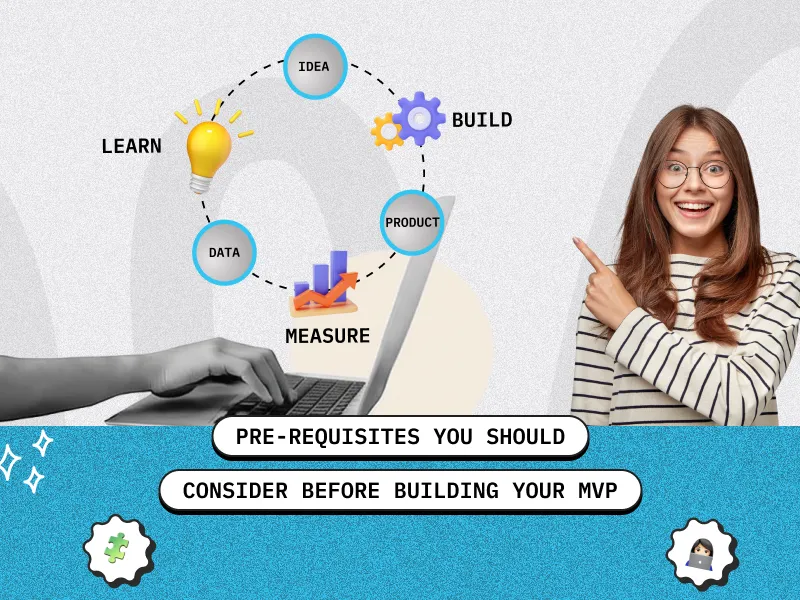
 Canada
 Hong Kong
 Global





 Love we get from the world