
TL;DR
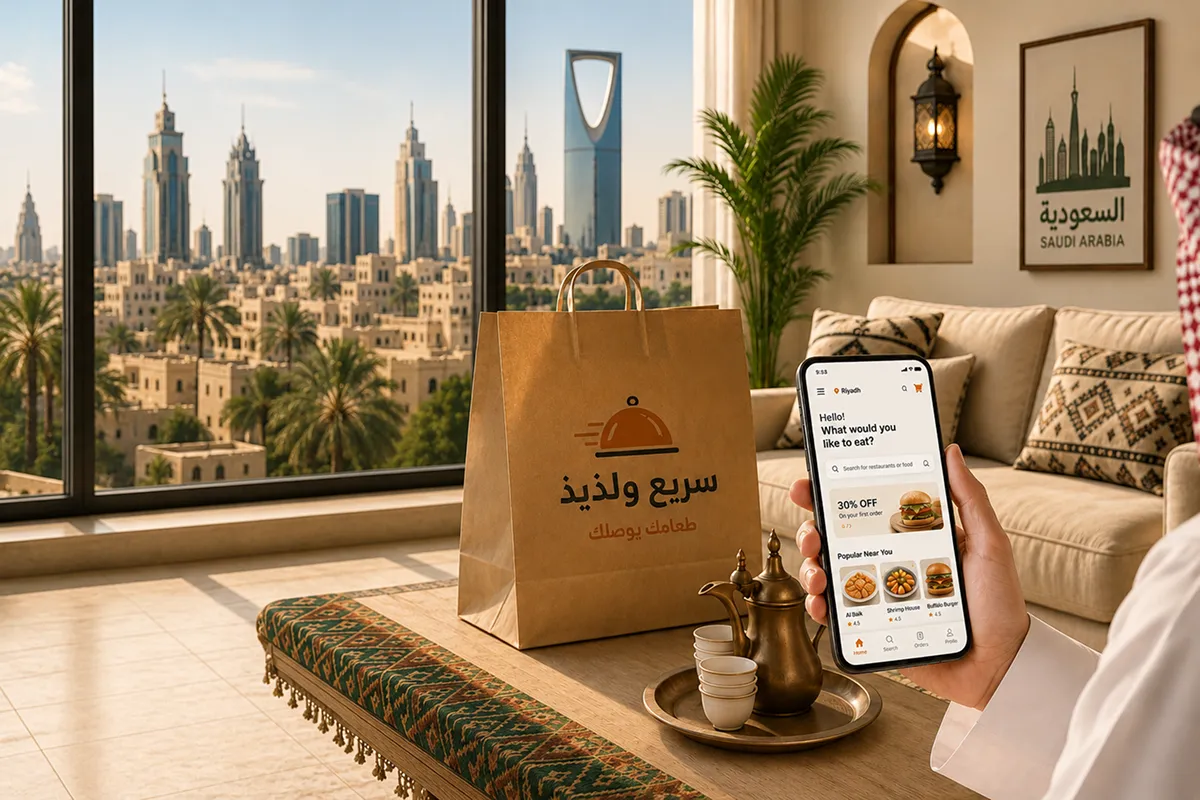
- The food delivery app market in Saudi Arabia is experiencing rapid growth, driven by digital transformation and Saudi Vision 2030.
- The success of an app begins with market research, competitor analysis, and identifying the target audience.
- Ensure compliance with legal requirements and local licensing before launch.
- Choose a scalable technical architecture to ensure performance and stability as your user base grows.
- Provide a fast and easy user experience for customers, restaurants, and delivery drivers alike.
- Support local payment methods such as Mada, Apple Pay, and STC Pay to streamline payments.
- Start by launching a minimum viable product (MVP) to test the concept and gather user feedback before making a full investment.
- Add core features such as real-time tracking, instant notifications, order ratings, and promotional offers.
- Focus on security, user data protection, and optimizing app speed to ensure a reliable experience.
Introduction
Food delivery apps have become an essential part of everyday life in Saudi Arabia, enabling millions of users to order meals conveniently from their favorite restaurants and food outlets. This rapid adoption is fueled by increasing smartphone usage, the widespread availability of digital payment solutions, improved logistics infrastructure, and government initiatives supporting digital transformation under Saudi Vision 2030.
As demand continues to grow, many businesses are partnering with a mobile app development company to build scalable, feature-rich food delivery applications that meet evolving customer expectations.
For entrepreneurs, startups, and established businesses, the Saudi food delivery market presents a significant investment opportunity. However, developing a successful application requires more than just a great idea. Businesses must understand customer expectations, comply with local regulations, select the right technologies, and deliver an outstanding user experience.
This guide explains everything you need to know about developing a food delivery app in Saudi Arabia—from evaluating the market opportunity and meeting legal requirements to planning the technical architecture and preparing for a successful launch.
Why Is the Food Delivery Market in Saudi Arabia a Great Investment Opportunity?
Saudi Arabia has become one of the fastest-growing digital economies in the Middle East. As consumers increasingly rely on mobile applications for everyday services, food delivery continues to be one of the country’s fastest-expanding digital sectors.
Several factors contribute to this growth, including increased internet penetration, changing consumer lifestyles, widespread smartphone adoption, and continuous government support for innovation and entrepreneurship.
For businesses looking to invest in the digital economy, food delivery remains a promising sector with long-term growth potential.
Market Size and Growth Outlook
The Saudi food delivery market continues to expand as more consumers embrace online ordering and digital payment solutions.
Some of the primary growth drivers include:
- Increasing smartphone and internet adoption.
- Growing preference for online food ordering.
- Expansion of restaurants offering delivery services.
- Government initiatives promoting digital transformation.
- Rising demand for fast, convenient, and reliable delivery services.
As investments continue to increase across Saudi Arabia’s technology ecosystem, demand for modern food delivery platforms is expected to remain strong in the coming years.
Saudi Consumer Behavior and Changing Ordering Habits
Consumer expectations have evolved significantly over the past few years. Today’s users expect food delivery applications to provide a seamless, reliable, and personalized experience.
Saudi consumers typically look for:
- Fast delivery times.
- Real-time order tracking.
- Multiple restaurant choices.
- Secure digital payment options.
- Loyalty programs and discounts.
- Responsive customer support.
Rather than simply offering online ordering, successful food delivery platforms focus on creating an end-to-end customer experience that encourages repeat purchases and long-term customer loyalty.
Leading Food Delivery Apps in Saudi Arabia and What Makes Them Stand Out
The Saudi market is highly competitive, with several well-established food delivery platforms serving millions of users.
Some of the leading platforms include:
- Jahez
- HungerStation
- ToYou
- Mrsool
Each platform has developed its own competitive strengths.
Jahez is recognized for its extensive market presence and fast delivery services across the Kingdom.
HungerStation offers one of the largest restaurant networks along with multiple payment options.
ToYou provides a flexible delivery experience supported by a user-friendly interface.
Mrsool follows a broader delivery model by handling multiple delivery categories beyond food orders.
Although competition is strong, businesses can still succeed by identifying underserved customer needs and delivering a differentiated experience.
How Can You Find a Competitive Advantage?
Launching another food delivery app with the same features as existing competitors is unlikely to generate long-term success.
Instead, businesses should focus on creating unique value by:
- Targeting a specific city or geographic region.
- Serving niche restaurant categories or cuisines.
- Delivering a faster and more intuitive user experience.
- Leveraging Artificial Intelligence (AI) to optimize delivery operations.
- Offering personalized loyalty programs and customer rewards.
Pro Tip: Thorough market research before development helps identify customer pain points, validate your business idea, and improve your chances of building a successful food delivery application.
Legal Requirements for Developing a Food Delivery App in Saudi Arabia
Before launching your application, it is essential to comply with Saudi Arabia’s legal and regulatory requirements. Meeting these obligations helps businesses operate legally while building trust with customers, restaurants, and business partners.
Establish Your Business and Obtain a Commercial Registration
The first step is establishing a legal business entity and obtaining the appropriate Commercial Registration (CR).
A valid Commercial Registration enables businesses to:
- Operate legally within Saudi Arabia.
- Partner with restaurants.
- Integrate local payment gateways.
- Sign commercial agreements.
- Conduct financial transactions in compliance with Saudi regulations.
Choosing the correct business activity during registration is equally important to ensure the company complies with local commercial requirements.
Requirements of the Communications, Space & Technology Commission (CST)
The Communications, Space & Technology Commission (CST) regulates various aspects of digital platforms and online services throughout Saudi Arabia.
Businesses operating food delivery applications should review applicable regulations related to digital service providers, including:
- Platform governance.
- Digital service quality.
- Customer protection.
- Data management requirements.
- Compliance with applicable communications regulations.
Meeting these requirements helps businesses maintain operational compliance while delivering reliable digital services.
Balady Platform Requirements for Food Transportation
The Balady Platform establishes health and operational requirements for transporting food safely throughout the Kingdom.
Food delivery businesses should ensure compliance with regulations covering:
- Suitable transportation methods.
- Food safety procedures.
- Vehicle cleanliness.
- Temperature control during transportation.
- Safe handling practices.
Maintaining these standards protects food quality while improving customer confidence.
Saudi Food and Drug Authority (SFDA) Food Safety Standards
The Saudi Food and Drug Authority (SFDA) oversees food safety regulations across Saudi Arabia.
Food delivery platforms and restaurant partners should follow SFDA guidelines covering:
- Food handling.
- Packaging.
- Storage.
- Transportation.
- Hygiene and safety standards.
Compliance with these regulations helps ensure customers receive food that meets established health and quality standards.
Protecting Customer Data and Complying with Saudi Regulations
Food delivery applications collect sensitive customer information, including:
- Customer names.
- Mobile numbers.
- Delivery addresses.
- Payment details.
Protecting this information should be a top priority.
Businesses should implement strong security measures while complying with Saudi regulations related to data privacy and information protection.
Providing a clear Privacy Policy and Terms of Service within the application also promotes transparency and strengthens customer trust.
How Does a Food Delivery App Work? (Complete Technical Architecture)
A food delivery application operates through an integrated ecosystem that connects customers, delivery drivers, restaurants, and administrators. Each component plays a specific role in ensuring a seamless ordering and delivery experience.
A typical food delivery platform consists of three primary systems:
- Customer App
- Driver App
- Merchant Dashboard & Admin Panel
Designing these systems efficiently helps improve operational performance, customer satisfaction, and business scalability.
Customer App
The Customer App serves as the primary interface between users and the platform. It should provide a simple, intuitive, and user-friendly experience.
Essential features include:
- User registration and secure login.
- Searching restaurants by location or cuisine.
- Browsing menus, prices, and promotions.
- Adding items to the shopping cart.
- Selecting a preferred payment method.
- Real-time order tracking.
- Rating restaurants, drivers, and completed orders.
A well-designed customer journey increases user satisfaction and encourages repeat purchases.
Driver App
The Driver App helps delivery partners efficiently manage and complete deliveries.
Its core functionality includes:
- Receiving new delivery requests.
- Accepting or declining orders.
- GPS navigation and route optimization.
- Updating delivery status.
- Viewing daily or weekly earnings.
- Communicating with customers and restaurants.
Integrating Artificial Intelligence (AI) into driver management can improve delivery efficiency by assigning orders to the nearest available driver and reducing overall delivery times.
Merchant Dashboard
The Merchant Dashboard allows restaurants to manage their daily operations from a centralized interface.
Key capabilities include:
- Managing menus and pricing.
- Creating promotions and discounts.
- Receiving and processing orders.
- Updating order status.
- Tracking sales reports and business performance.
An intuitive Merchant Dashboard helps restaurants improve operational efficiency while providing better customer service.
Admin Panel
The Admin Panel acts as the control center for the entire platform.
Typical administrative functions include:
- Managing customers, restaurants, and delivery drivers.
- Monitoring orders and resolving customer issues.
- Managing commissions and payments.
- Viewing analytics and business reports.
- Sending notifications and promotional campaigns.
- Monitoring operational KPIs.
A comprehensive Admin Panel enables businesses to monitor platform performance and make informed operational decisions.
Essential Features Every Food Delivery App Should Have
Developing a successful food delivery app requires more than just basic ordering functionality. Businesses should include features that align with user expectations in the Saudi market.
Local and International Payment Methods
Providing multiple secure payment options improves customer convenience and increases successful order completion rates.
Recommended payment methods include:
- Mada
- Apple Pay
- STC Pay
- UrPay
- Credit and debit cards
- Cash on Delivery (where applicable)
Supporting trusted local payment solutions significantly improves customer confidence.
GPS and Real-Time Order Tracking
GPS technology enables customers to monitor their deliveries in real time while helping drivers navigate efficiently.
Benefits include:
- Improved delivery accuracy.
- Reduced delivery times.
- Increased customer transparency.
- Better operational efficiency.
Push Notifications
Push notifications keep users informed throughout the ordering process.
Examples include:
- Order confirmation.
- Food preparation updates.
- Driver dispatch notifications.
- Delivery arrival alerts.
- Promotional offers and discounts.
Timely notifications improve customer engagement and reduce uncertainty during delivery.
Customer and Restaurant Ratings
A transparent rating system helps maintain service quality while encouraging continuous improvement.
Customers can evaluate:
- Restaurants.
- Delivery drivers.
- Food quality.
- Delivery experience.
This feedback also helps restaurants identify opportunities to improve their services.
Loyalty Programs and Promotional Offers
Customer retention is just as important as customer acquisition.
Popular loyalty features include:
- Reward points.
- Discount coupons.
- Seasonal promotions.
- Free delivery campaigns.
- Referral rewards.
These programs encourage repeat orders and increase long-term customer loyalty.
How Does Artificial Intelligence (AI) Improve Food Delivery Apps?
Artificial Intelligence (AI) has become a competitive advantage for modern food delivery platforms.
Common AI use cases include:
- Optimizing delivery routes.
- Predicting customer demand.
- Personalized restaurant recommendations.
- Customer behavior analysis.
- AI-powered customer support chatbots.
These capabilities improve operational efficiency while delivering a more personalized customer experience.
Food Delivery App Development Process
Developing a successful application involves several well-planned stages, from validating the business idea to launching the final product.
Conduct Market Research and Define Your Business Model
Every successful project starts with understanding the market.
Businesses should:
- Analyze competitors.
- Study customer behavior.
- Identify market gaps.
- Define revenue streams.
Common revenue models include:
- Commission on each order.
- Delivery fees.
- Restaurant subscriptions.
- In-app advertising.
Identify Your Target Audience
Understanding your target audience helps prioritize features and improve marketing efforts.
You may choose to target:
- Specific cities.
- Particular customer demographics.
- Niche restaurant categories.
- Premium or budget-conscious users.
A clearly defined audience enables businesses to develop more relevant products.
Design the User Interface and User Experience (UI/UX)
An effective UI/UX design should prioritize usability and accessibility.
Important considerations include:
- Arabic language support.
- Right-to-Left (RTL) compatibility.
- Simple navigation.
- Fast user interactions.
- Mobile-first design principles.
A well-designed interface significantly improves customer satisfaction.
Choose the Right Development Approach
The ideal technology depends on project objectives, available budget, and scalability requirements.
Common approaches include:
- Native App Development for maximum performance.
- Cross-Platform Development for faster delivery and lower development costs.
- Progressive Web Apps (PWAs) for browser-based accessibility.
Selecting the right approach helps balance performance, development time, and budget.
Develop the Minimum Viable Product (MVP)
Launching an MVP allows businesses to validate their concept before investing in a full-featured application.
An MVP should include only the essential functionality required to test the product with real users and gather valuable feedback.
Test the Application and Ensure Quality (QA Testing)
Comprehensive QA Testing should verify:
- Performance.
- Usability.
- Security.
- Reliability.
- Device compatibility.
Thorough testing helps minimize technical issues after launch.
Launch the App and Continuously Improve It
Launching the application is only the beginning.
Successful businesses continuously:
- Monitor customer behavior.
- Analyze performance metrics.
- Release feature updates.
- Improve usability.
- Expand services based on customer feedback.
Continuous improvement helps maintain competitiveness in a rapidly evolving market.
How Much Does It Cost to Develop a Food Delivery App in Saudi Arabia?
There is no fixed development cost for a food delivery application. The total investment depends on project scope, required features, supported platforms, integrations, and technical complexity.
Factors That Influence Development Cost
Several factors directly affect the total budget, including:
- Number of application features.
- UI/UX design complexity.
- Android and iOS development.
- Merchant Dashboard and Admin Panel.
- Third-party integrations.
- Payment gateway implementation.
- Artificial Intelligence (AI) features.
- Testing and maintenance.
Estimated Development Cost
| Development Stage | Estimated Timeline | Estimated Cost (SAR) |
| UI/UX Design | 2–4 weeks | 10,000–30,000 |
| MVP Development | 2–4 months | 60,000–150,000 |
| Full App Development | 4–8 months | 150,000–500,000+ |
| QA Testing | 2–4 weeks | Depends on project scope |
| Maintenance & Updates | Ongoing | Varies by project size |
Note: These estimates may vary depending on project requirements, technology stack, feature complexity, and the experience of the development team. To get a more accurate estimate based on your specific requirements, you can use an app development cost calculator before starting the development process.
How Can You Reduce Development Costs Without Compromising Quality?
Businesses can optimize development costs by:
- Starting with an MVP.
- Prioritizing essential features.
- Selecting the most suitable technology stack.
- Planning the project thoroughly before development begins.
- Working with an experienced food delivery app development company.
Best Practices for Building a Successful Food Delivery App
Building a successful application requires more than technical development. Long-term growth depends on business strategy, customer experience, and continuous optimization.
Choose the Right Revenue Model
Common monetization strategies include:
- Order commissions.
- Delivery fees.
- Restaurant subscriptions.
- In-app advertising.
The ideal revenue model depends on your business goals and target audience.
Customer Acquisition and Retention Strategies
Sustainable growth requires attracting new customers while retaining existing ones.
Effective strategies include:
- Welcome offers for new users.
- Loyalty and rewards programs.
- Fast and reliable delivery.
- Responsive customer support.
- Digital marketing and search engine optimization.
Key Performance Indicators (KPIs) to Track
Monitoring KPIs helps businesses measure performance and identify opportunities for improvement.
Important metrics include:
- Daily order volume.
- Average delivery time.
- Customer Acquisition Cost (CAC).
- Customer retention rate.
- Average Order Value (AOV).
- Customer ratings.
- Order cancellation rate.
Conclusion
Developing a food delivery app in Saudi Arabia presents a valuable business opportunity as the Kingdom continues to embrace digital transformation and online food ordering. Success depends on understanding the local market, complying with regulatory requirements, selecting the right technology, and delivering a seamless customer experience supported by local payment methods.
Launching with a Minimum Viable Product (MVP), gathering customer feedback, and continuously improving the platform can help reduce development risks and support long-term business growth. With the right strategy, technology, and execution, businesses can build a scalable food delivery platform capable of competing successfully in the Saudi market.
Frequently Asked Questions (FAQs)
What is the first step in developing a food delivery app in Saudi Arabia?
The first step is conducting market research, analyzing competitors, defining your business model, and identifying your target audience before beginning the design and development process.
Do I need a Commercial Registration to launch a food delivery app?
Yes. Operating a food delivery business legally in Saudi Arabia generally requires obtaining the appropriate Commercial Registration (CR) and complying with applicable regulations.
Which government authorities regulate food delivery apps in Saudi Arabia?
Depending on the nature of the business, the relevant authorities include the Ministry of Commerce, the Communications, Space & Technology Commission (CST), the Saudi Food and Drug Authority (SFDA), and the Balady Platform.
How long does it take to develop a food delivery app?
An MVP typically requires two to four months, while a fully featured application may take four to eight months or longer depending on the project’s complexity.
How much does it cost to develop a food delivery app in Saudi Arabia?
Development costs vary according to the application’s features, supported platforms, technical complexity, and overall project scope.
What is the best technology for developing a food delivery app?
Businesses can choose between Native App Development, Cross-Platform Development, or Progressive Web Apps (PWAs) based on their performance requirements, budget, and scalability goals.
Can I launch an MVP before developing the complete application?
Yes. Launching an MVP is one of the most effective ways to validate your business idea, gather customer feedback, and reduce development risks before expanding the platform.
How do food delivery apps generate revenue?
Food delivery applications commonly generate revenue through commissions, delivery fees, restaurant subscriptions, in-app advertising, and additional value-added services.
Which payment methods should a food delivery app support in Saudi Arabia?
To provide the best customer experience, businesses should support Mada, Apple Pay, STC Pay, UrPay, and major credit and debit cards.
How does Artificial Intelligence (AI) improve food delivery apps?
AI enhances food delivery platforms by optimizing delivery routes, predicting customer demand, delivering personalized recommendations, analyzing user behavior, and supporting customer service through AI-powered chatbots.


